
Last updated: 2026-03-23
TL;DR
- Most growing businesses don’t have an execution problem; they have a prioritisation problem.
- A fractional CMO provides senior marketing leadership at 25-40% the cost of a full-time hire.
- SMBs with a documented marketing plan are 6.7x more likely to report marketing success.
- The real cost of no senior guidance is 12-18 months of budget spent on the wrong channels.
- A fractional CMO builds your internal capability, not agency dependency.
The Prioritisation Problem: Why Early-Stage Marketing Fails
Here is a pattern we have seen repeatedly across 250+ client engagements over the past 15 years: a founder with a good product, a growing customer base, and a marketing budget that produces almost nothing measurable. The issue is rarely effort. It is almost always prioritisation.
The numbers confirm this. According to a 2025 report from Constant Contact, only 18% of SMBs feel very confident in the effectiveness of their marketing, down from 27% the year before. Businesses are spending more and trusting their results less.
A founder running a business between £500k and £10M in revenue does not have time to become an expert in SEO, paid media, email automation, content strategy, and analytics all at once. Yet that is exactly what most try to do. The LocaliQ Small Business Marketing Trends Report found that 53% of SMBs spend only 1-10 hours per week on marketing, and the smaller the business, the less likely they are to have anyone dedicated to it full-time.
Without someone senior enough to say “stop running Facebook ads and fix your conversion rate first” or “your SEO investment won’t pay off for 9 months, so you need a bridge strategy”, the default is to try everything and commit to nothing. That is the prioritisation problem. It is not a lack of activity. It is the absence of informed decision-making about where to put your limited budget and time.
This matters because the stakes are real. Data from the U.S. Bureau of Labor Statistics shows that 20.4% of businesses fail in their first year, and 49.4% close within five years. Research from CB Insights puts poor marketing among the top reasons startups cite for failure. You do not get unlimited chances to find the right channel mix.
What a Fractional CMO Actually Does (That Agencies Don’t)
The term “Fractional Chief Marketing Officer” gets thrown around loosely. Some people use it as a fancy label for a marketing consultant who sends you a strategy document and disappears. That is not what we are describing here.
A genuine fractional CMO is an experienced marketing executive who embeds in your business on a part-time basis, typically 2-4 days per month. They sit in your leadership meetings. They assess your current marketing, identify what is working and what is waste, and build a plan based on evidence rather than guesswork. Then they stay involved to make sure the plan is actually executed.
A fractional CMO sets the direction; an agency follows it. That distinction matters more than most founders realise.
Agencies are built to execute. They run your Google Ads, post your social content, or build your website. What they are not built to do is tell you whether Google Ads is the right channel for your business in the first place. Most agencies have a financial incentive to keep you spending on the service they sell, not to step back and evaluate whether that service is the best use of your budget.
Here is what a strong fractional CMO covers that agencies typically do not:
Strategic audit and channel prioritisation
Before spending a single pound on new campaigns, a fractional CMO audits everything you are currently doing. Which channels are generating revenue? Which are generating vanity metrics? Which should you cut entirely? This is the work that saves the most money, and it happens before any new spend begins.
Vendor and agency management
If you do need agencies for execution (and many businesses do), a fractional CMO manages those relationships on your behalf. They hold agencies accountable to real KPIs, not activity metrics. They know when an agency is underperforming because they have managed agency relationships across hundreds of engagements before.
Team building and capability transfer
This is where a fractional CMO differs most from the traditional agency model. The goal is not to create dependency. It is to build your team’s ability to run marketing independently. That might mean hiring the right first marketing manager, training existing staff on analytics, or creating processes that survive after the engagement ends. At YLA, this principle is central to our three-pillar methodology: we build capability so you graduate from needing external support.
Cross-functional alignment
Marketing does not exist in a vacuum. A fractional CMO connects your marketing activity to sales, product, and customer service. They ensure your messaging is consistent, your lead handoff process works, and your marketing budget is tied to actual revenue outcomes rather than impressions or clicks.
The Real Cost of Not Having Senior Marketing Leadership
Marketing budgets are not growing. The Gartner 2025 CMO Spend Survey found that marketing budgets have flatlined at 7.7% of company revenue for a second consecutive year, with 59% of CMOs reporting they have insufficient budget to execute their strategy. For smaller businesses, the picture is even tighter.
When your budget is limited, every pound you misallocate hurts twice: you lose the money itself, and you lose the opportunity cost of what that money could have done in the right channel.
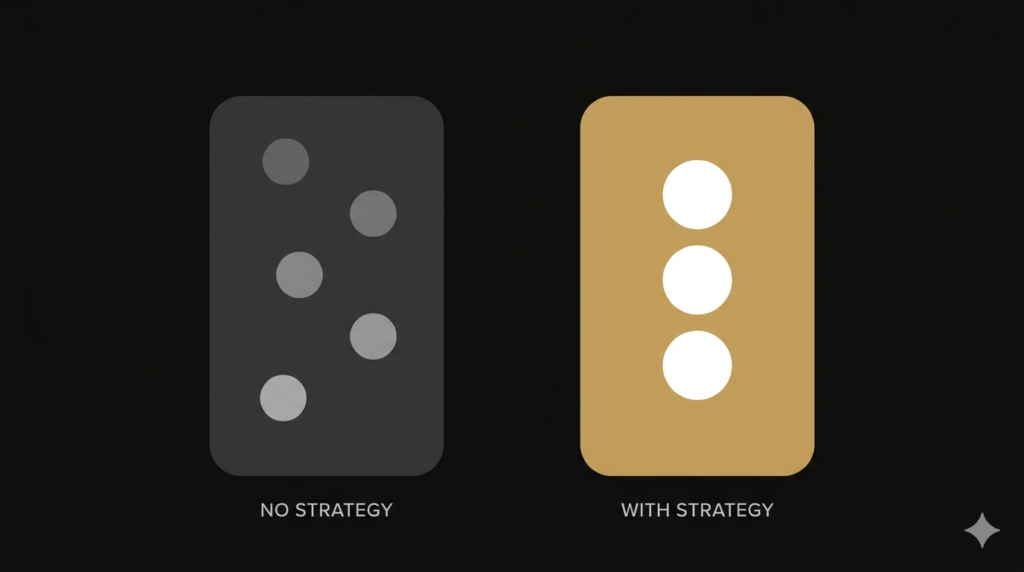
We see this regularly. A founder hires a social media agency because a competitor is active on Instagram. Six months and £15,000 later, they have 2,000 followers and zero attributable revenue. Then they try SEO, hire a freelance content writer, and produce 30 blog posts that nobody reads because there was no keyword research, no site structure, and no promotion plan. Another 6 months gone. By month 18, they have spent £30,000-£50,000 across multiple channels with nothing to show for it except frustration and a distrust of marketing as a whole.
This pattern is not unique. It is the default outcome when marketing decisions are made by someone without the experience to evaluate the options properly.
The data supports this at a macro level too. According to Revenue Memo’s analysis of SMB marketing data, small businesses with a documented marketing plan are 6.7 times more likely to report marketing success than those without one. A plan requires someone with the experience to write one that actually fits your business stage, your budget, and your market.
The cost of a fractional CMO engagement is typically between £3,000 and £10,000 per month, depending on the scope. The cost of 18 months of trial-and-error marketing is significantly higher, both in direct spend and in lost growth.
Fractional CMO vs Agency vs Full-Time Hire: An Honest Comparison
There is no single correct answer here. The right model depends on your revenue, your team, and how much of the marketing function you want to own internally. But founders deserve a clear, honest breakdown rather than a sales pitch for whichever model the writer happens to sell.
| Factor | Fractional CMO | Marketing Agency | Full-Time CMO |
|---|---|---|---|
| Typical cost (annual) | £36,000-£120,000 | £24,000-£120,000+ | £150,000-£300,000+ (inc. benefits) |
| Strategic leadership | Yes, sets direction | No, follows direction | Yes, sets direction |
| Execution capacity | Limited; manages executors | High; team-based delivery | Depends on team beneath them |
| Ramp-up time | 2-4 weeks | 2-4 weeks | 3-6 months |
| Risk if wrong fit | Low; month-to-month | Medium; typically 6-12 month contracts | High; 2-3x salary to replace |
| Builds internal capability | Core focus | Rarely | Possible but not guaranteed |
| Objectivity | High; external perspective | Mixed; incentive to retain scope | Decreases over time |
| Best for revenue stage | £500k-£10M | Any (for execution) | £10M+ |
Comparison of marketing leadership models for growing businesses (2026). Costs shown in GBP and reflect UK market rates.
A few points worth noting here:
Full-time CMO salaries have reached record levels. Market data compiled by Averi puts the average full-time CMO salary in the US at $347,000 (approximately £275,000), with total compensation in tech companies approaching $1 million. For a business generating £1M-£5M in revenue, that is not a realistic hire. A fractional CMO provides equivalent strategic expertise at 25-40% of the cost.
Agencies still have a role. If you need someone to run your paid media campaigns day-to-day or produce content at volume, an agency or freelancer is often the right call. The mistake is hiring an agency to do strategy. That is not their function, and their incentive structure works against it. A fractional CMO can manage agency relationships and ensure you are getting value, which is something most founders struggle to evaluate on their own.
Our strategy and growth service is built around exactly this principle: put the right strategic brain in place first, then bring in execution support only where it is needed and only for as long as it is needed.
How to Know When Your Business Is Ready
Not every business needs a fractional CMO. If you are pre-revenue or spending less than £1,000 per month on marketing, you probably need to solve product-market fit before you invest in marketing leadership. But there are clear signals that the prioritisation problem is costing you money.
You are likely ready for senior marketing leadership if:
Your revenue is between £500k and £10M, and marketing spend has no clear ROI. You are spending money on marketing, but you cannot draw a line between that spend and revenue. You measure activity (posts published, ads running) rather than outcomes (leads generated, cost per acquisition, customer lifetime value).
You, as the founder, are making marketing decisions. Research from Intuit’s 2025 Small Business Advertising Trends Report found that among the youngest, highest-revenue businesses surveyed, only 8% had the business owner overseeing marketing strategy. The most successful growth-stage businesses separate the founder from day-to-day marketing decisions early.
You have been through 2 or more agencies in the past 18 months. Agency churn is one of the strongest signals that the problem is not execution but strategy. If the brief is wrong, even a brilliant agency will produce the wrong output. You do not need a better agency. You need someone to write the brief.
Your marketing team is junior and unsupervised. You hired a marketing coordinator or social media manager, but they have no senior marketer to learn from. They are working hard, but they are working without direction. A fractional CMO gives them structure, mentorship, and a clear plan to follow.
You are about to make a significant marketing investment. Launching a new product, entering a new market, or rebuilding your website are all moments where getting the strategy wrong is expensive. A fractional CMO can pressure-test the plan before you commit the budget.
What to Look for in a Fractional CMO
The fractional CMO market has grown rapidly. Research from Averi reports that fractional CMO adoption has grown 245% in the past two years, with 80% of companies reporting higher marketing impact compared to previous full-time arrangements. That growth has also attracted a wave of people rebranding themselves as “fractional CMOs” without the experience to back it up.
When evaluating candidates, ask these questions:
Have they held senior marketing roles in-house?
Someone who has only worked in agencies or as a consultant has a different perspective from someone who has sat inside a business, managed a P&L, hired and fired team members, and been accountable for revenue targets. Both perspectives have value, but the in-house experience is what equips them to run your marketing function, not just advise on it.
Do they have breadth across channels?
The whole point of a fractional CMO is that they can evaluate all your options and prioritise. If their background is exclusively in one discipline (say, SEO or paid social), they will naturally bias toward that channel. You need someone who understands the full mix: organic search, paid media, email, content, analytics, and how they connect to commercial outcomes.
Will they transfer knowledge or create dependency?
This is the most important question and the one most people forget to ask. A good fractional CMO should be working toward making themselves unnecessary. They should be building your team’s skills, documenting processes, and creating systems that work without them. If someone’s engagement model requires you to keep paying indefinitely with no plan for graduation, they are not a fractional CMO. They are an expensive retainer.
Can they show you what they will not do?
Beware of anyone who promises to handle everything. A fractional CMO working 2-4 days per month cannot also be your content writer, your ads manager, and your analytics specialist. They should be clear about what sits inside their scope (strategy, leadership, oversight) and what needs separate resource (execution, production, day-to-day management). That clarity is a sign of experience.
Frequently Asked Questions
What is a fractional CMO and how is it different from a marketing consultant?
A Fractional Chief Marketing Officer (CMO) is an experienced marketing executive who works inside your business part-time, typically 2-4 days per month. Unlike a consultant, who usually delivers a strategy document and leaves, a fractional CMO stays embedded. They attend leadership meetings, manage agencies and vendors, mentor your team, and take ongoing accountability for marketing performance.
How much does a fractional CMO cost for a small business?
In the UK, fractional CMO engagements typically range from £3,000 to £10,000 per month, depending on scope and seniority. In the US, the range is $5,000 to $15,000 per month. This is 25-40% of the cost of a full-time CMO hire, which averages $347,000 in base salary alone before benefits and bonuses.
When should a growing business hire a fractional CMO?
The strongest signals are: revenue between £500k and £10M with no clear marketing ROI, the founder still making day-to-day marketing decisions, two or more agency relationships that did not deliver, or a junior marketing team with no senior oversight. If you are about to make a major marketing investment (website rebuild, new market entry, product launch), that is also a strong trigger.
Can a fractional CMO replace a marketing agency?
Not entirely. A fractional CMO provides strategy and leadership, not day-to-day execution at volume. Most businesses still need agencies or freelancers for production work such as content creation, ad management, or design. The difference is that a fractional CMO ensures those execution partners are working on the right things, to the right brief, and measured against the right KPIs.
How long does a fractional CMO engagement typically last?
Most engagements run between 6 and 18 months. The first 90 days focus on auditing, planning, and quick wins. The following months focus on execution, team building, and process creation. A good fractional CMO should have a clear plan for graduating you out of the engagement, not keeping you on retainer indefinitely.
What results should I expect in the first 90 days?
In the first 90 days, expect a complete audit of your current marketing, a prioritised channel strategy, clear KPIs tied to revenue, and the elimination of any spend that is not delivering measurable results. You should also see the start of process improvements and, if needed, a plan for hiring or restructuring your marketing team.
Do I still need a marketing team if I hire a fractional CMO?
It depends on your stage. Some businesses start with a fractional CMO and no team; the CMO helps hire the first marketing hires and manages agencies in the interim. Others already have a small team that needs direction. Either way, the fractional CMO’s job includes building the internal capability your business needs to eventually run marketing without them.
Stop Guessing. Start With a Strategy.
If your marketing budget is being spent without a clear strategy behind it, that is the problem worth solving first. We work with founders who are ready to stop cycling through agencies and start building a marketing function that actually drives revenue. One conversation is enough to tell you whether we are the right fit.