
Last updated: 2026-03-25
TL;DR
- Most SMEs should spend 7-12% of gross revenue on marketing in 2026.
- At least 55-70% of that budget should go to digital channels.
- The biggest mistake is not underspending; it is spending without a plan.
- Channel allocation matters more than total spend for businesses under £10M.
- You do not need a full-time CMO to get this right, but you do need strategic oversight.
Why Most Marketing Budget Advice Is Useless
Search for “how much should I spend on marketing” and you will find the same recycled answer on every website: “5-10% of revenue.” That range is so wide it is functionally meaningless. A business doing £2M in revenue faces a difference of £100,000 between those two ends. That is a full-time hire. Or an entire paid media programme. Or nothing at all, if you get the allocation wrong.
The problem with generic benchmarks is they ignore the variables that actually matter: your gross margins, your customer acquisition cost, your sales cycle length, how saturated your market is, and whether you are trying to maintain position or grow aggressively. A SaaS company with 80% margins and a 36-month customer lifetime value should budget very differently from a manufacturing firm with 20% margins selling through distributors.
We have worked with over 250 clients across 15+ years, and the pattern is consistent: businesses that treat marketing budgets as a percentage-of-revenue formula, divorced from strategy, almost always misallocate. They overspend on channels that feel productive (usually paid search) and underspend on channels that compound over time (usually content and SEO).
How Much Should Your SME Actually Spend in 2026?
The most cited benchmark comes from Gartner’s annual CMO Spend Survey. Their 2024 survey found that marketing budgets averaged 7.7% of company revenue, down from 9.1% in 2023. Deloitte’s CMO Survey (February 2025) reported a similar range, with B2B product companies averaging 9.4% and B2B services companies at 12.2%.
But averages hide more than they reveal. What matters for your business is your specific context.
The Revenue-Stage Framework
Rather than giving you a single number, here is a framework we use with our Fractional CMO clients that accounts for growth stage:
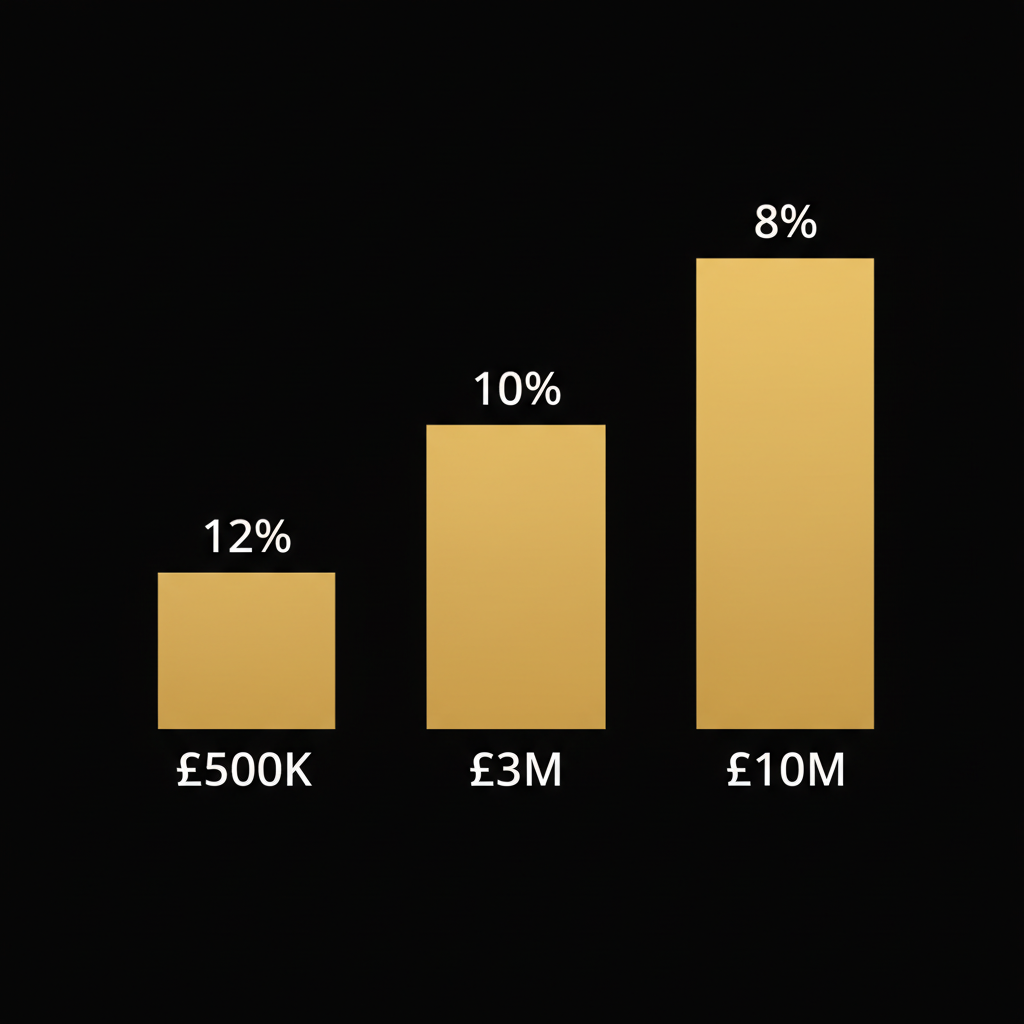
| Annual Revenue | Growth Goal | Recommended Marketing Spend (% of Revenue) | Approximate Annual Budget |
|---|---|---|---|
| £500K – £1M | Aggressive growth (30%+ YoY) | 12-15% | £60K – £150K |
| £500K – £1M | Steady growth (10-20% YoY) | 8-10% | £40K – £100K |
| £1M – £3M | Aggressive growth | 10-14% | £100K – £420K |
| £1M – £3M | Steady growth | 7-10% | £70K – £300K |
| £3M – £10M | Aggressive growth | 8-12% | £240K – £1.2M |
| £3M – £10M | Steady growth | 5-8% | £150K – £800K |
Notice that earlier-stage businesses need to spend a higher percentage. This is not optional. Smaller companies have less brand equity, less organic traffic, less word-of-mouth momentum. You are buying awareness that established competitors already own.
Margins Change Everything
A business with 60% gross margins can afford 12% of revenue on marketing and still be profitable while growing. A business with 25% margins doing the same will bleed cash. Always calculate your marketing budget as a percentage of gross profit, not just revenue, before committing.
If 12% of revenue equals 48% of your gross profit, you have a problem. A safer ceiling for most SMEs: marketing should not exceed 25-30% of gross profit unless you have external funding and a clear path to unit economics that work.
Where Should That Budget Go? Channel Allocation for 2026
Getting the total right is step one. Step two is allocating it across channels in a way that matches your business model. This is where most SMEs go wrong, because the “right” allocation depends on factors that no blog post can fully account for. But we can give you a strong starting framework.
The WordStream Digital Marketing Benchmarks (2024) and data from the Statista Digital Advertising Report (2025) both point to the same trend: digital channels now account for 55-72% of total marketing spend for SMEs in the UK and US. That share has been climbing 3-5 percentage points per year for the past five years.
The Baseline Allocation Model
For a B2B SME spending £150K per year on marketing, here is what a sensible starting allocation looks like:
| Channel | % of Budget | Approximate Spend | Primary Role |
|---|---|---|---|
| SEO and Content | 25% | £37,500 | Compounding organic visibility |
| Paid Search (PPC) | 20% | £30,000 | Demand capture, high-intent traffic |
| Paid Social | 15% | £22,500 | Demand generation, audience building |
| Email and Marketing Automation | 10% | £15,000 | Nurture, retention, reactivation |
| Website and CRO | 10% | £15,000 | Conversion improvement |
| Analytics and Tooling | 5% | £7,500 | Measurement infrastructure |
| Brand and Creative | 10% | £15,000 | Brand consistency, creative assets |
| Events or Partnerships | 5% | £7,500 | Relationship-driven pipeline |
A B2C business would shift paid social higher (20-25%) and events lower. An ecommerce business would add a separate line for shopping/marketplace ads and increase CRO spend. The principle stays the same: allocate based on your sales motion, not based on what is trendy.
The Channel Maturity Trap
A common pattern we see: a business pours 60%+ of budget into paid search because it is the only channel showing clear, attributable ROI. Meanwhile, organic content, email, and brand get starved. Two years later, their cost per acquisition on paid search has doubled because they have no organic presence, no email list, and zero brand pull. They have built a marketing machine entirely dependent on renting attention from Google.
This is why our three-pillar methodology emphasises building owned assets alongside paid channels. Paid gets you speed. Owned gets you compounding returns. You need both.
What About AI and GEO? Should You Budget for New Channels?
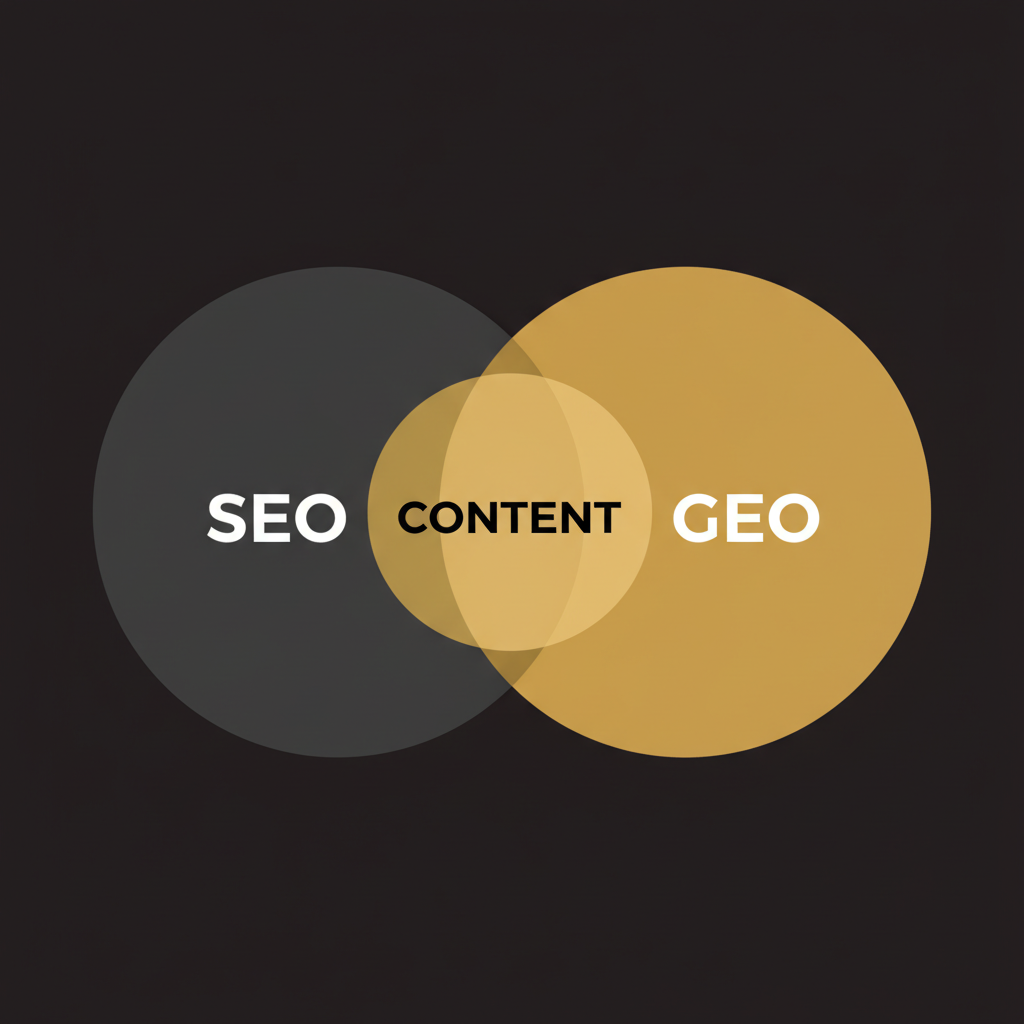
Yes. But not with a separate line item; with a re-examination of your existing content and SEO budget.
Generative Engine Optimisation (GEO) is not a channel in the traditional sense. It is a shift in how your content needs to be structured so that AI-powered search engines (Google AI Overviews, Perplexity, ChatGPT with browsing) cite your business in their responses. As of 2026, studies from BrightEdge (2025) indicate that AI-generated answers now appear in roughly 30% of informational search queries on Google.
What this means for your budget: the SEO and content line in your budget should include GEO readiness. Specifically, that means:
- Structuring content with direct answers, cited sources, and clear factual claims (not vague thought-leadership waffle).
- Implementing schema markup on your key pages so AI crawlers can extract structured data.
- Building topical authority across clusters of related content, not publishing random blog posts.
We cover this in more depth in our AI transformation work with clients. The businesses getting ahead are not adding GEO budget on top. They are redirecting 20-30% of their existing content spend towards GEO-ready formats.
The 5 Most Expensive Budgeting Mistakes SMEs Make
After working with 250+ businesses, certain patterns repeat. If you recognise any of these, you are probably leaving revenue on the table.
1. No Measurement Infrastructure Before Spending
Spending £100K+ per year without proper GA4 setup, server-side tagging, and attribution modelling is like driving without a speedometer. You have no idea what is working. We have seen businesses run Google Ads for 18 months without conversion tracking correctly configured. That is not an edge case; it is disturbingly common.
Fix: allocate 5-8% of your marketing budget to analytics and tooling before you spend a penny on media. Set up GA4 with server-side tagging, configure your attribution model, and establish baseline KPIs.
2. Confusing Revenue-Weighted ROAS with Actual Profitability
A 500% ROAS on Google Ads sounds excellent until you realise your margins are 30% and your fulfilment costs eat another 15%. Channel-level ROAS is useful but it is not profit. Always model your marketing spend against contribution margin, not revenue.
3. Treating the Budget as Fixed and Annual
The best-performing SME marketing teams we work with review allocation quarterly and adjust based on performance data. A January budget plan that does not change until December is a plan that ignores 11 months of learning. Build in 15-20% of your budget as a “flex” allocation that gets redirected quarterly to the best-performing channels.
4. Hiring Before Strategy
A £45K marketing hire without a clear strategy is £45K spent on someone who will default to what they know. If your hire is a social media specialist, guess where all the budget goes? Strategy comes first. Execution hires come second.
5. Ignoring Customer Retention in the Budget
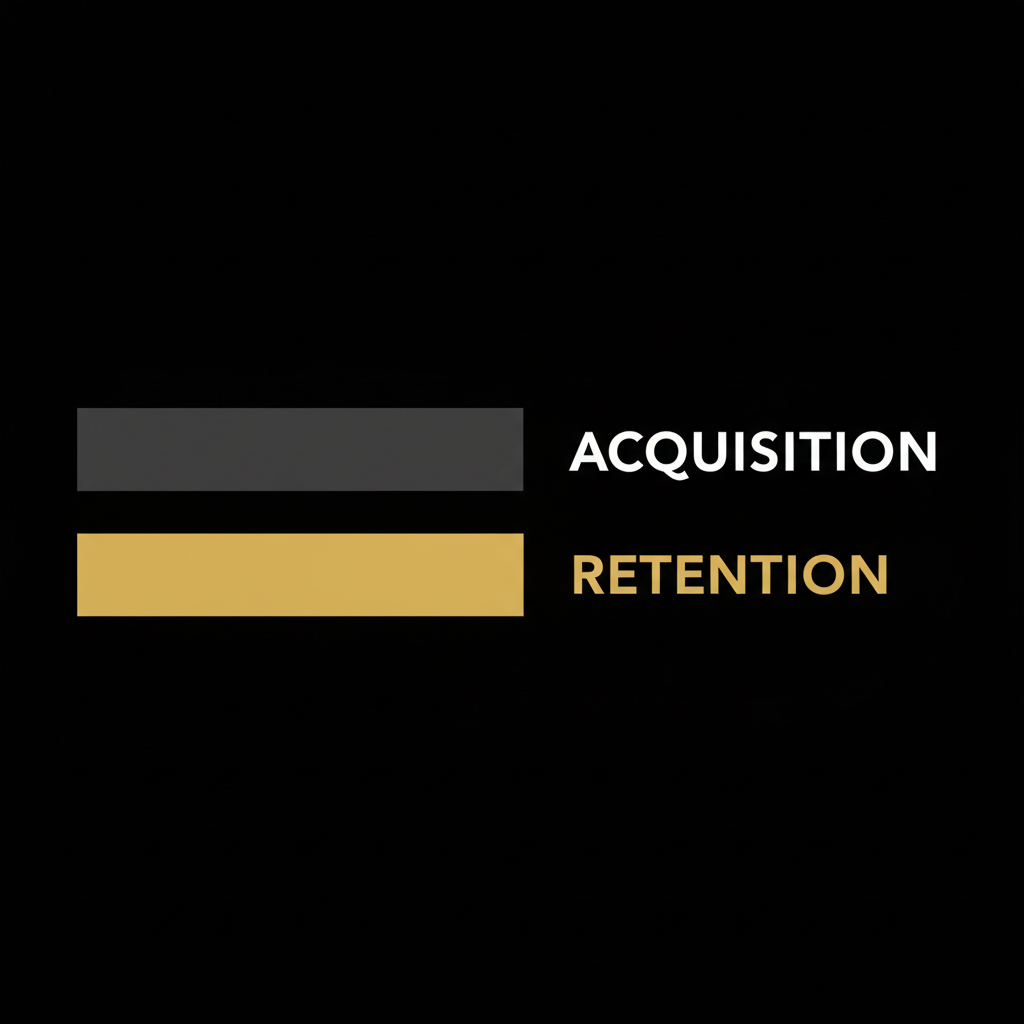
The Bain & Company statistic gets repeated because it is true: increasing customer retention by 5% can increase profits by 25-95% (Harvard Business Review, 2014). Yet most SME marketing budgets allocate 80%+ to acquisition and almost nothing to retention. Email, loyalty programmes, onboarding optimisation, and referral systems are chronically underfunded.
How to Build Your 2026 Marketing Budget: A Step-by-Step Process
Rather than guessing at percentages, here is the process we walk through with every Fractional CMO engagement:
- Start with your revenue target. Work backwards from where you need to be in 12 months. If you are at £2M and targeting £2.6M (30% growth), you need £600K in new revenue.
- Calculate your average customer value. If your average customer is worth £10K over their first year, you need roughly 60 new customers to hit target (assuming zero churn on existing).
- Estimate your current cost per acquisition. If you do not know this number, that is your first problem to solve. For most B2B SMEs, it ranges from £200 to £2,000 depending on deal size.
- Model the required marketing investment. 60 new customers at £500 CPA = £30K in direct acquisition spend. But that is just media. Add content production, tooling, analytics, and the people managing it all.
- Apply the margin test. Does the total marketing budget sit within 25-30% of your gross profit? If yes, proceed. If no, either adjust growth targets or find efficiency gains in your current spend.
- Allocate across channels based on your sales motion. Use the baseline allocation model above, adjusted for whether you are B2B or B2C, product or service, short or long sales cycle.
- Set quarterly review dates. Lock them in now. Budget allocation that does not get reviewed quarterly is budget allocation that drifts.
This process takes a skilled marketer about 2-3 days to do properly, including competitive analysis and benchmarking. If you do not have someone in-house who can do this, a fractional CMO is specifically designed for this kind of strategic work without requiring a £120K+ full-time salary.
What If You Have Less Than £50K to Spend?
Not every SME has six figures to allocate. If your total marketing budget is between £20K and £50K, the rules change. You cannot afford to be in every channel. Concentration beats diversification at this level.
The £20K-£50K Playbook
Pick two channels maximum. For most B2B businesses at this spend level, that means:
- SEO and content (40-50% of budget): Build a content engine that compounds. This is slow but it is the only channel where your spend today still generates returns in 2028.
- One paid channel (30-40% of budget): Google Ads for demand capture if people search for what you sell. LinkedIn Ads for demand generation if they do not.
- Analytics and tooling (10-15% of budget): You still need measurement. GA4, a CRM with proper tracking, and one marketing automation tool (HubSpot Starter or similar).
Skip brand campaigns, events, display advertising, and TikTok. These are not bad channels. They are just wrong channels when you have £30K and need to show ROI. You can add them when your revenue supports a larger budget.
At small budgets, discipline is the strategy. Every pound has to justify its existence.
Do You Need a CMO to Get This Right?
You need strategic oversight. Whether that comes from a full-time CMO, a fractional one, or a very capable Head of Marketing depends on your stage and budget.
The honest answer: a business spending less than £100K on marketing does not need a full-time CMO. You need someone with CMO-level thinking for 2-4 days per month. That is the entire premise behind the fractional CMO model. You get the strategic direction, the budget framework, the channel architecture, and the performance accountability, without a £150K salary plus equity.
What you should not do is hand your budget to a junior marketer and hope for the best. Or hand it to an agency that marks up media spend and sends you a dashboard you do not understand. Both of those paths end in the same place: money spent without clarity on what it produced.
We have seen this pattern across more than 100 mentees in 15+ countries through our work on MentorCruise. The businesses that get marketing budgets right share one trait: someone with genuine strategic experience is setting the direction, even if they are not there full-time.

Frequently Asked Questions
What percentage of revenue should an SME spend on marketing in 2026?
Most SMEs should spend between 7% and 12% of gross revenue on marketing in 2026. Businesses in aggressive growth mode (targeting 30%+ year-on-year growth) should be at the higher end. Businesses maintaining steady growth (10-20% YoY) can sit closer to 7-8%. Always cross-check against gross profit margins to ensure sustainability.
How should I split my marketing budget between digital and traditional channels?
For most SMEs in 2026, 55-72% of total marketing spend should go to digital channels. If your customers discover and research your product online (which applies to nearly every B2B business and most B2C), the ratio should be closer to 70-80% digital. Traditional channels like events, print, and direct mail still work for specific use cases but should not dominate.
Is £50K enough for a marketing budget?
Yes, but only if you concentrate it. A £50K budget spread across six channels will underperform in all of them. Pick two channels maximum (typically SEO/content plus one paid channel), invest in proper measurement, and be disciplined about where every pound goes. Concentration beats diversification at small budget levels.
Should I include staff salaries in my marketing budget calculation?
Yes. A marketing budget that only counts media spend and agency fees is incomplete. Include salaries or contractor costs for anyone whose primary role is marketing, plus tooling, creative production, and media spend. The 7-12% benchmark typically includes all of these. If you are only counting media, your real spend is higher than you think.
How often should I review my marketing budget allocation?
Quarterly at minimum. Set calendar dates at the start of the year for Q1, Q2, Q3, and Q4 reviews. Keep 15-20% of your total budget as flex allocation that gets redirected each quarter based on channel performance data. Annual set-and-forget budgets waste money by ignoring what the data is telling you.
Do I need a CMO to manage my marketing budget?
You need CMO-level strategic thinking, but not necessarily a full-time hire. Businesses spending under £100K on marketing are well served by a fractional CMO who works 2-4 days per month. This gives you the strategic direction, budget framework, and accountability without a £120K-£150K annual salary commitment.
What is the biggest marketing budget mistake SMEs make?
Spending without measurement infrastructure. Too many businesses commit significant budget to channels like Google Ads or social media without proper analytics, conversion tracking, or attribution modelling in place. Fixing your measurement first, even if it delays campaign launches by a month, will save you far more than it costs.
Should I budget separately for GEO and AI optimisation in 2026?
No. GEO should be integrated into your existing content and SEO budget, not treated as a separate line item. Redirect 20-30% of your content spend towards GEO-ready formats: structured answers, cited sources, schema markup, and topical authority clusters. It is a shift in how you produce content, not an additional channel.
Ready to Build a Marketing Budget That Actually Works?
If you are tired of guessing at percentages and want a budget framework built around your specific business, margins, and growth targets, we can help. Our Fractional CMO engagements start with exactly this kind of strategic groundwork.




Nội dung hay và thực tế. Letco là đơn vị du học Hàn Quốc giàu kinh nghiệm, đồng hành cùng học viên từ A-Z. Ghé letco.vn để được tư vấn miễn phí.
Saved and shared with a friend! For anyone on the market, the thing that helped me most was consolidating the search — I landed on https://hhhr.dzsiitxic.top/. It lists jobs by city and company with filters that actually work. Anyway, back to the article — thanks again!
Saved and shared with a friend. If budget matters, the nice thing is https://eljo.xyhhttozgr.top/ is free to browse. It’s a listings site that covers roles across cities and companies, refreshed constantly.
Thanks, this cleared things up. More on the subject at network-ng28games.com for those curious.