Last updated: 2026-05-22
TL;DR
- OpenAI is rolling out ads inside ChatGPT, placing brands directly into AI conversations.
- This is the most significant new ad channel since Google Ads launched in 2000.
- Intent signals in ChatGPT are richer than search queries, creating new targeting depth.
- Early movers who test now will own the playbook before CPCs spike.
- Brands also need to invest in GEO to appear in organic AI answers alongside paid placements.
What Are ChatGPT Ads and Why Should You Care?
OpenAI confirmed its move into advertising in late 2024 when it hired Shivakumar Venkataraman, a former Vice President of Advertising at Google, to lead its ads business (Financial Times, 2024). By early 2025, the first sponsored results began appearing in ChatGPT search, and through 2025 and into 2026, the ad format has expanded beyond search into conversational responses.
The core concept is straightforward: when a user asks ChatGPT a question that signals commercial intent, a sponsored recommendation or product placement can appear within the AI’s answer. This is not a banner ad bolted onto the side of a chat window. ChatGPT ads are woven into the conversation itself, making them contextually relevant in a way display ads never managed.
OpenAI’s CFO Sarah Friar stated in 2025 that advertising would become a meaningful revenue stream, supplementing the company’s subscription model (Reuters, 2025). With over 400 million weekly active users as of early 2026, the scale of this audience is enormous, and crucially, these users are not browsing passively. They are asking specific questions, describing specific problems, and requesting specific recommendations.
That level of declared intent is what makes this channel different from anything that came before it, including Google Search.
The Google Ads Parallel: Why History Is About to Repeat Itself
When Google launched AdWords in October 2000, most businesses ignored it. Banner ads were the dominant format. Search advertising seemed niche, even strange. Why would you pay to appear next to someone’s search results?
Within 5 years, Google Ads became the single most valuable advertising channel in history. By 2004, Google’s ad revenue hit $3.14 billion USD. By 2023, it exceeded $237 billion USD (Alphabet 10-K Filing, 2024). The businesses that understood the format early, that built internal expertise before costs climbed, were the ones that captured disproportionate returns.
The parallels are striking, but there are also critical differences.
What Is the Same
Both channels intercepted users at the point of intent. Before Google Ads, advertisers had to guess where their audience might be (a magazine, a TV channel, a website). Search ads let you show up at the exact moment someone typed a relevant query. ChatGPT ads do the same thing, but within a conversational context where the user has often provided far more detail about what they want and why.
Both channels started with low competition and low CPCs. Google Ads in 2001 had cost-per-clicks measured in pennies for keywords that now cost £15 or more. ChatGPT advertising, still in its early rollout as of mid-2026, has similarly uncrowded auction dynamics. That will not last.
What Is Different
| Factor | Google Ads (2000) | ChatGPT Ads (2026) |
|---|---|---|
| User input | 2-4 word keyword query | Full sentences describing context, needs, and preferences |
| Response format | 10 blue links + top ad slots | Single conversational answer with integrated sponsorship |
| Intent depth | Inferred from keywords | Explicitly stated in natural language |
| Ad visibility | Separate from organic results (labelled) | Embedded within the answer (labelled but contextual) |
| User trust dynamic | Users learned to skip ads | Users treat AI answers as curated recommendations |
| Competitor visibility | Multiple ads visible simultaneously | Often a single sponsored recommendation per response |
That last row matters enormously. In Google Search, your ad sits alongside 3 or 4 competitors. In a ChatGPT response, a sponsored mention might be the only brand named. The attention is not split. This is closer to a personal recommendation than a classified listing, and the psychological impact on the user is fundamentally different.
How ChatGPT Ad Formats Actually Work
As of 2026-05-22, OpenAI has rolled out several ad placements across its products. The specifics continue to evolve, but the core formats that have emerged are worth understanding.
Sponsored Responses in ChatGPT Search
When a user uses ChatGPT’s search functionality (queries that pull live web results), sponsored links can appear alongside or within the summarised results. These function similarly to Google Shopping or text ads, but they are presented within ChatGPT’s synthesised answer rather than as a separate ad block.
Conversational Product Mentions
This is the format with the most long-term significance. When a user asks ChatGPT for a recommendation (“What’s the best project management tool for a 10-person remote team?”), a sponsored product can be included in the response, clearly labelled as sponsored. The product appears within the flow of the AI’s answer, with a brief description of why it fits the user’s stated criteria.
Display Placements in Free-Tier Interfaces
OpenAI has also tested more traditional display-style ads within the free tier of ChatGPT, particularly on mobile. These are less interesting from a strategic standpoint, closer to standard programmatic placements than a new paradigm.
The conversational product mention is where the real disruption sits. It turns ChatGPT from a search engine into something closer to a trusted advisor who occasionally makes sponsored recommendations, and that distinction matters for how you build creative and targeting strategy.
Why Intent Signals in ChatGPT Are Richer Than Search Keywords
Consider the difference between these two interactions:
Google Search query: “best CRM small business”
ChatGPT prompt: “I run a recruitment agency with 12 employees. We’re currently using spreadsheets to track candidates but it’s getting messy. I need a CRM that integrates with LinkedIn, costs under £50 per user per month, and doesn’t require a developer to set up. What do you recommend?”
The Google query gives you a topic and a vague audience signal. The ChatGPT prompt gives you industry, company size, current pain point, specific integration needs, budget, and technical constraints. All stated explicitly by the user.
For advertisers, this is a goldmine. ChatGPT users describe their buying criteria in their own words before seeing any ad. The targeting potential of this data, even when anonymised and aggregated, is orders of magnitude richer than keyword match types.
Google spent 20 years building machine learning models to infer intent from short keyword strings. OpenAI’s users hand-deliver their intent in full paragraphs. The efficiency gains for advertisers who learn to work with this data will be substantial.
This also creates a new skill requirement. Keyword research, the backbone of digital marketing for two decades, becomes less central. What replaces it is an understanding of conversational intent patterns: the types of questions users ask, the way they describe problems, and the specificity of their requests. Marketers who can analyse and segment these patterns will build better campaigns than those still thinking in keyword buckets.
Best Practices for ChatGPT Advertising in 2026
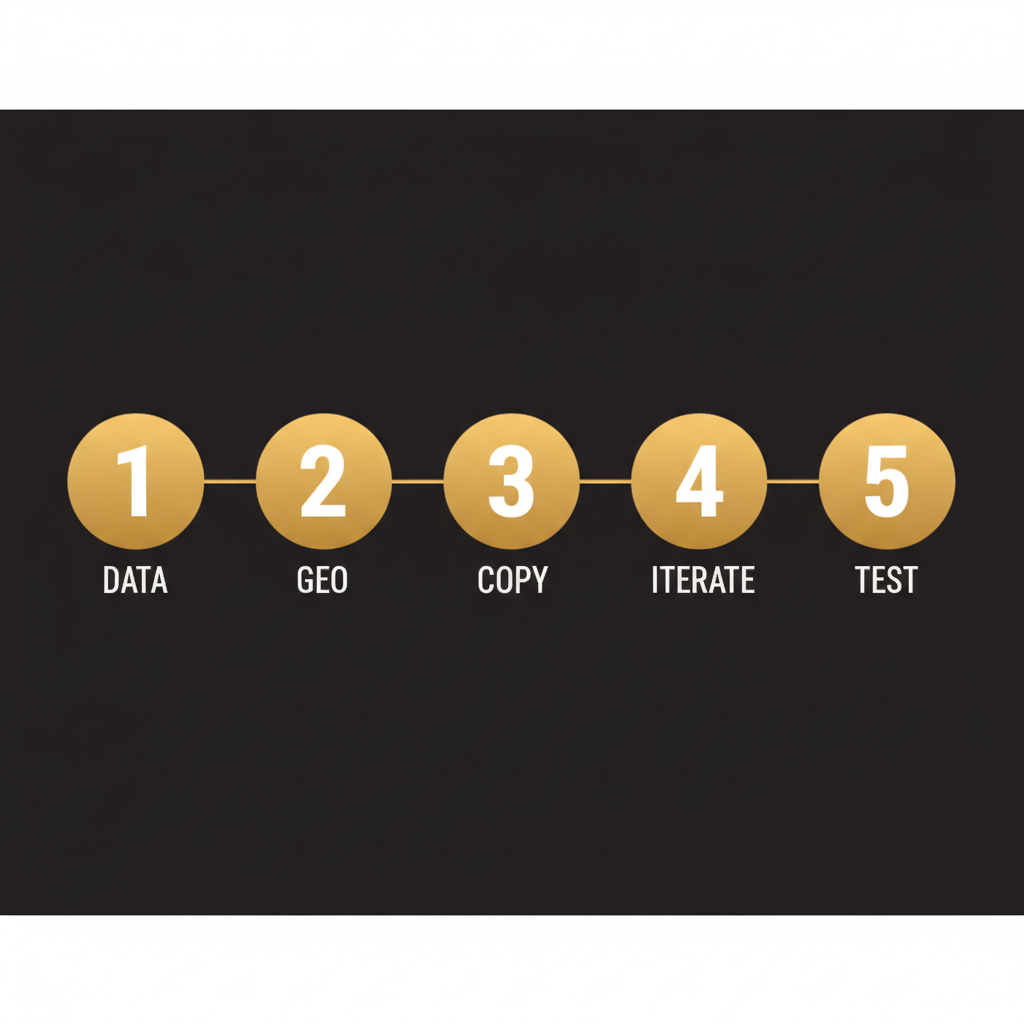
The channel is early. Best practices are still being written. But based on what we have seen from initial campaigns and from the underlying mechanics of how conversational AI serves ads, here is what smart marketers should be doing right now.
1. Structure Your Product Data for AI Comprehension
ChatGPT ads work best when the AI can match your product to a user’s described need. That means your product feeds, descriptions, and structured data need to be clear, specific, and accurate. Vague marketing copy (“the all-in-one solution for modern teams”) performs worse than precise product descriptions that state capabilities, pricing tiers, integrations, and use cases in plain language.
If you are running e-commerce, this means enriching your product feeds with detailed attributes beyond what Google Shopping historically required. If you sell SaaS or services, it means having structured content on your site that an AI can parse and reference.
2. Invest in GEO Alongside Paid Placements
Paid and organic are not separate in conversational AI the way they were in traditional search. A ChatGPT response might include both a sponsored product and organically cited brands. If your competitor appears organically in the same answer where your paid placement shows up, the user sees both. Brands that invest in generative engine optimisation (GEO) alongside ChatGPT ads will dominate the full response.
GEO ensures your brand is the one that AI models cite when no ad budget is involved. Combined with paid placements, you can own the conversation. We have written extensively about how GEO works and why it matters, and it is foundational to our three-pillar methodology for exactly this reason.
3. Write Ad Copy That Sounds Like a Recommendation, Not a Billboard
The format is conversational. Your ad copy needs to match. Hard-sell, feature-dump ad copy that works in Google Ads text slots feels jarring inside a ChatGPT answer. The most effective early ChatGPT ad creative reads like a helpful suggestion, not a marketing message.
Think: “Notion offers a flexible workspace that handles project tracking, docs, and wikis in one tool, starting at £7 per user/month” rather than “Try Notion, THE #1 PRODUCTIVITY TOOL. Sign up FREE today.”
4. Monitor and Iterate on Conversational Query Patterns
You will not have traditional keyword data. What you will have is insight into the types of prompts that trigger your ads and how users respond. Build a feedback loop: review which query themes convert, adjust your product positioning to address those themes, and refine your targeting. This is closer to qualitative research than the quantitative keyword analysis most paid media teams are used to.
5. Start Testing Now, Before CPCs Climb
Every major ad platform follows the same curve. Early adopters get cheap clicks and disproportionate learnings. Then agencies pile in, competition increases, and costs rise. Google Ads CPCs have increased by an average of 10% year-over-year for the past decade (WordStream, 2024). ChatGPT ads will follow the same trajectory. The brands testing today are building the muscle memory and data that will give them an edge when this channel becomes crowded.
What This Means for Google, Meta, and the Existing Ad Ecosystem
ChatGPT ads do not replace Google Ads or Meta Ads. Not yet, and probably not for years. But they do something potentially more threatening to incumbents: they capture intent upstream.
If a user asks ChatGPT for a recommendation and gets a satisfactory answer (sponsored or organic), they may never perform the Google search that would have triggered your search ad. They may never see the retargeting display ad on a publisher site. The buying journey gets shorter, and the platforms that own the top of the decision funnel capture the most value.
Google recognises this threat. Its investment in AI Overviews (formerly Search Generative Experience) and Gemini integration across Search is a direct response to the possibility that users will shift research behaviour from search engines to AI assistants (Google Blog, 2024).
For marketers, the practical implication is clear: diversify. A sound growth strategy in 2026 cannot rely solely on Google and Meta. It needs to account for the fact that user behaviour is fragmenting across traditional search, AI assistants, social search (TikTok, Reddit), and voice interfaces.
This does not mean abandoning Google Ads. It means watching your Google Ads impression share and search volume trends closely. If you start seeing declining query volumes for terms where ChatGPT provides strong answers, that is your signal that budget reallocation is overdue.
The Risks and Limitations You Need to Know
We would be doing you a disservice if we painted this as pure upside. There are real risks and open questions with ChatGPT advertising that any serious marketer needs to consider.
Trust Erosion
Users trust ChatGPT because it feels impartial. The moment ads become prominent, that trust faces pressure. If OpenAI gets the balance wrong (too many ads, poor labelling, biased recommendations), users will treat ChatGPT answers with the same scepticism they now apply to Google’s top results. OpenAI is aware of this; Friar has publicly stated that ad quality and user experience are top priorities. But the incentive to increase ad load as revenue pressure grows is real and proven across every ad-funded platform in history.
Measurement Is Immature
Attribution for ChatGPT ads is still being built. You can track clicks from sponsored links, but measuring the influence of a branded mention within a conversational answer is harder. Did the user convert because of the ad, or because ChatGPT also recommended you organically? How do you attribute a purchase that happens 3 days after a ChatGPT conversation? These are solvable problems, but the measurement infrastructure is not yet where Google Ads or Meta Ads measurement sits today.
Regulatory Uncertainty
The EU’s AI Act and ongoing FTC scrutiny in the US both touch on transparency requirements for AI-generated content that includes commercial recommendations. How these regulations apply to ads embedded in AI responses is still being clarified. Brands operating in regulated industries (finance, healthcare, legal) need to watch this space closely.
Limited Advertiser Controls (For Now)
Targeting options, bid strategies, and creative formats are still more limited than mature platforms offer. You cannot yet build the kind of granular audience segments or automated bid strategies that Google Ads provides. This will improve, but early adopters need to accept a degree of manual effort and experimentation that more mature channels do not require.
How to Prepare Your Business for Conversational AI Advertising
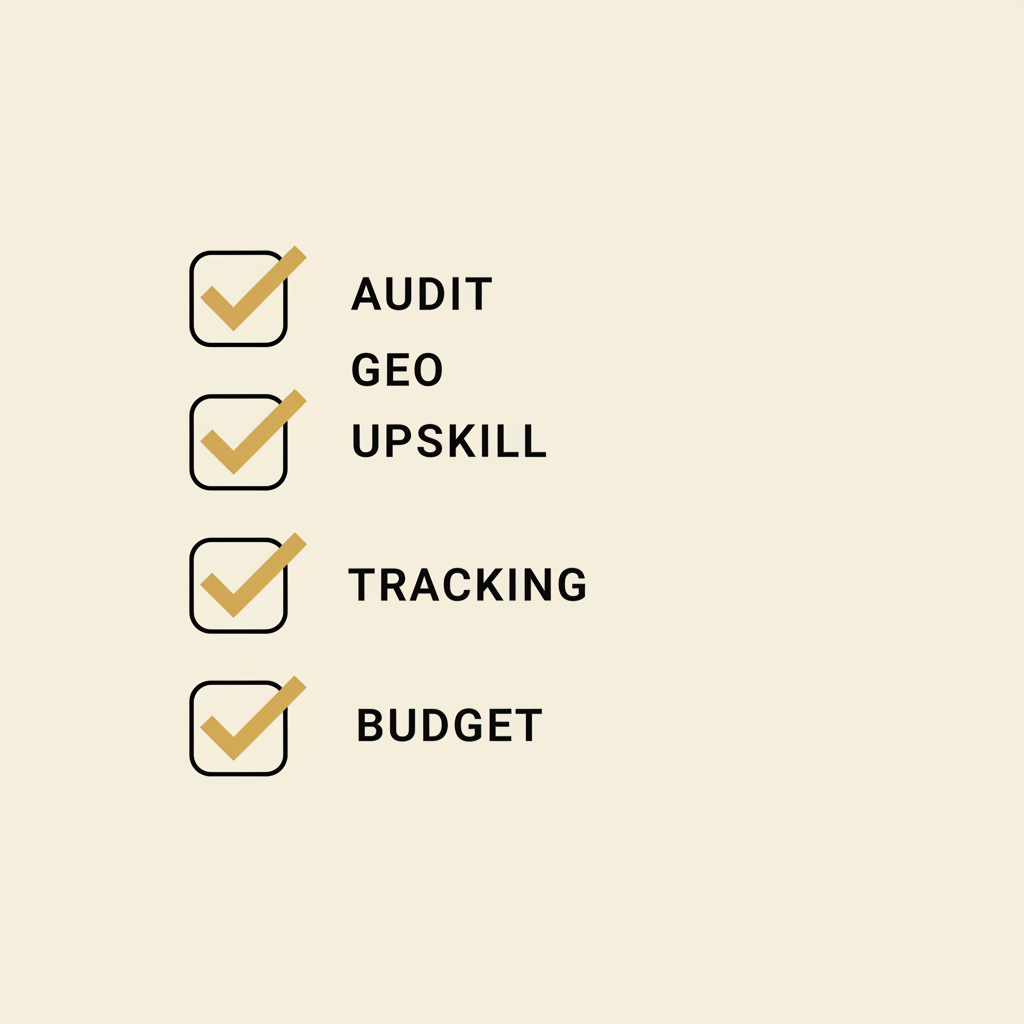
Whether you plan to run ChatGPT ads next month or next year, there are concrete steps to take now that will put you ahead of competitors who wait.
- Audit your content for AI readability. Can an AI model parse your product pages, pricing, and feature descriptions clearly? If your website is heavy on vague marketing language and light on structured, factual content, fix that first. This benefits both paid and organic AI visibility.
- Build your GEO foundation. Ensure your brand appears in organic AI responses for your core topics. This is not optional; it is the baseline. Paid placements without organic presence look like the brand nobody recommends unless they are paying for it.
- Upskill your paid media team. The skills that make someone excellent at Google Ads (keyword research, bid management, ad copy testing) are necessary but not sufficient for conversational AI advertising. Add conversational UX thinking, prompt engineering awareness, and qualitative intent analysis to your team’s toolkit.
- Set up proper tracking infrastructure. Ensure your analytics can attribute conversions from ChatGPT referral traffic. Check that UTM parameters and server-side tracking are configured to capture this new traffic source distinctly from organic or other paid channels.
- Allocate a test budget. You do not need to move 30% of your Google Ads spend. Start with 5-10% of your experimental budget. Run campaigns for 60-90 days. Collect data. Learn what works before costs rise.
The businesses that treat this as a “wait and see” situation will find themselves in the same position as companies that dismissed Google Ads in 2002: playing catch-up in an auction where early movers already own the best positions and the deepest data.
Frequently Asked Questions
What are ChatGPT ads?
ChatGPT ads are sponsored placements that appear within ChatGPT’s AI-generated responses. They can take the form of sponsored links in ChatGPT search results, branded product mentions within conversational answers, or display ads in the free-tier interface. All sponsored content is labelled as such.
How much do ChatGPT ads cost?
As of 2026-05-22, ChatGPT ad pricing varies by format and targeting. The auction model is similar in principle to Google Ads (cost-per-click and cost-per-impression options), but CPCs are generally lower due to lower competition. This is expected to change as more advertisers enter the platform.
Will ChatGPT ads replace Google Ads?
Not in the short term. Google Ads remains the largest digital advertising platform by revenue. ChatGPT ads represent an additional channel that captures a different type of user intent. Over time, if users shift research behaviour from search engines to AI assistants, budget allocation will follow. Smart marketers are testing both.
Can small businesses run ChatGPT ads?
OpenAI has been expanding access progressively. Initial rollout focused on larger advertisers, but self-serve options are becoming available. Small businesses with clear product-market fit and strong product data are well-positioned to benefit, particularly in niches where Google Ads CPCs are already prohibitively expensive.
What is the difference between ChatGPT ads and GEO?
ChatGPT ads are paid placements within AI responses. Generative engine optimisation (GEO) is the practice of ensuring your brand appears in organic AI-generated answers without paying for placement. Both are important. GEO builds credibility and baseline visibility; ChatGPT ads provide additional reach and control over positioning.
How do I measure ChatGPT ad performance?
Click-through rates and conversion tracking from ChatGPT referrals are the primary metrics available. Ensure your analytics platform can distinguish ChatGPT traffic from other sources using UTM parameters or referral data. Measurement tools are still maturing, so expect improvements in attribution capabilities through 2026 and 2027.
Are ChatGPT ads clearly labelled as advertising?
Yes. OpenAI labels all sponsored content within ChatGPT responses. The specific labelling format has evolved, but transparency is a stated priority, partly driven by regulatory requirements under the EU AI Act and FTC guidelines.
Should I shift my entire ad budget to ChatGPT ads?
No. ChatGPT ads are a test-and-learn channel in 2026. Allocate 5-10% of your experimental budget to build data and internal expertise. Maintain your core Google Ads and Meta Ads campaigns while monitoring whether search volumes decline in categories where AI assistants are providing direct answers.
Ready to Build Your AI Advertising Strategy?
ChatGPT ads are just one piece of a larger shift toward AI-driven marketing. We help businesses build the internal capability to stay ahead of these changes, not just react to them. If you want to understand how conversational AI advertising fits into your growth strategy, let’s talk.