Last updated: 2026-04-08
TL;DR
- AI agents and tools now market themselves as ‘AI fractional CMOs’ for a fraction of the cost.
- They handle content drafting, reporting, and data summaries well. Strategy and judgement, not so much.
- AI agents cannot read organisational politics, manage people, or make trade-offs under ambiguity.
- The real value is a human fractional CMO who uses AI, not an AI agent pretending to be one.
- Treat AI agents as powerful tools inside a human-led strategy, not as the strategist.
The Pitch: Why ‘AI as Your Fractional CMO’ Sounds So Appealing

The sales pitch is compelling, and it goes something like this. Why pay £5,000 a month for a human fractional CMO when an AI agent can analyse your data, produce your content calendar, draft your copy, build your reports, and suggest your next campaign, all for £200 a month in software subscriptions?
Tools like Jasper, HubSpot’s AI agents, and dozens of newer startups now position themselves as autonomous marketing strategists. Some explicitly use the phrase “AI CMO.” Others position their agents as capable of replacing senior marketing leadership entirely. The promise: feed in your business context, connect your data sources, and let the agent run your marketing.
According to McKinsey’s 2025 Global Survey on AI, 72% of organisations were using AI in at least one business function, up from 55% in 2023. Spend on AI marketing tools grew 30% year-over-year according to Gartner’s 2025 CMO Spend Survey. The adoption is real. The question is whether “AI doing tasks” and “AI providing leadership” are the same thing.
They are not. And the distinction matters more than most founders realise before they cancel their fractional CMO and hand the keys to an agent.
What AI Agents Actually Do Well in Marketing
Before explaining the gaps, it is worth being honest about where AI agents genuinely perform. We use AI tools daily across our work with clients, within our fractional CMO engagements, and as part of our AI transformation service. Dismissing AI tools entirely would be as foolish as trusting them completely.
Content Drafting and Iteration
Large language models produce competent first drafts of blog posts, email sequences, social copy, and ad variations. A well-prompted agent can generate 20 ad headline variants in seconds. This used to take a copywriter half a day. The output still needs human editing, but the raw production speed is genuinely useful.
Data Summarisation and Pattern Recognition
Connect an AI agent to your GA4, your CRM, and your ad platforms, and it can pull out patterns that would take a human analyst hours to find. “Your email open rates drop 15% on Tuesdays” or “Paid search CPA rose 22% since you paused Brand Campaign B” are the kinds of observations AI surfaces quickly and accurately.
Reporting Automation
Weekly and monthly performance reports are perfect AI territory. Structured data in, formatted summary out. No human needs to spend 4 hours every Monday building a slide deck of numbers that existed in dashboards already.
Competitive Monitoring
AI agents can track competitor content output, pricing page changes, new feature launches, and social activity with minimal configuration. Useful, and tedious for humans to do manually.
These are genuine capabilities, and they save real hours every week. But notice what they all have in common: they are execution tasks with clear inputs and outputs. They are the work of a marketing coordinator or analyst, not a CMO.
Where AI Agents Fail as Marketing Leaders
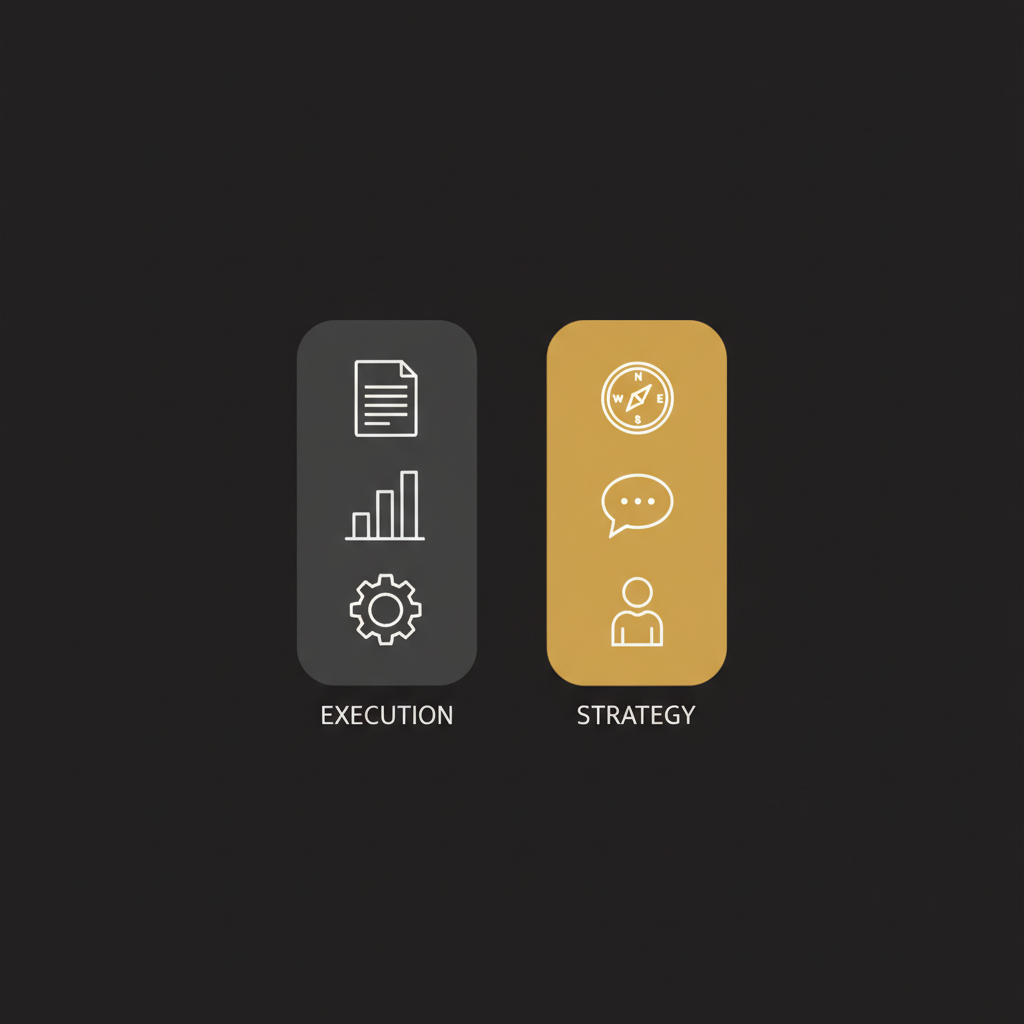
A CMO, fractional or otherwise, does not primarily produce content or summarise dashboards. Their value sits in a set of capabilities that AI agents, as of 2026, cannot replicate. Here is where the gaps are most severe.
Strategic Prioritisation Under Ambiguity
Your Series A SaaS company has £15,000 a month in marketing budget and 3 possible directions: double down on SEO, launch a paid social programme, or invest in a partner channel. The data is mixed. SEO is working but slowly. Paid social tests were inconclusive. The CEO wants revenue in 90 days. A fractional CMO synthesises commercial context, team capability, competitive dynamics, and risk tolerance to make a call. An AI agent will give you a pros-and-cons table. Useful background material, but not a decision.
Strategy is the art of choosing what not to do, and AI agents do not make trade-offs. They present options. A CMO commits to one and owns the outcome.
Organisational Context and Politics
Your head of sales thinks marketing is a cost centre. Your CEO cares about brand but measures performance. Your best content writer is about to leave. These are not data points an AI agent can access or interpret. A human fractional CMO reads the room, manages upward, and adjusts strategy based on what is politically feasible, not just analytically optimal. This is soft knowledge, and it matters enormously in determining which strategy actually gets executed.
People Management and Capability Building
If you have an internal marketing team of 2 to 10 people, a fractional CMO’s job includes coaching, developing, and sometimes difficult conversations about performance. AI agents cannot mentor your junior marketer through their first campaign launch, nor can they tell your content lead that their work is good but their prioritisation is wrong. The human element of leadership is not a nice-to-have. It is the mechanism through which strategy becomes action.
Judgement When the Model is Wrong
AI agents generate confident, well-structured answers. They also hallucinate, misattribute data, and make recommendations based on patterns that do not apply to your specific context. Deloitte’s State of AI in the Enterprise report (2025) found that only 26% of companies rated their AI maturity as high, and a primary barrier was trust in AI-generated outputs. Someone needs to catch the errors. That someone needs enough marketing experience to spot a plausible-sounding recommendation that is actually wrong.
| Capability | AI Agent | Human Fractional CMO |
|---|---|---|
| Content first drafts | Strong | Slower, but higher strategic alignment |
| Data summarisation | Strong | Slower, but with contextual interpretation |
| Reporting automation | Excellent | Unnecessary if AI handles it |
| Strategic prioritisation | Weak: presents options, does not decide | Strong: commits and owns outcomes |
| Organisational awareness | None | Strong |
| People development | None | Core function |
| Judgement under ambiguity | Weak to dangerous | Primary value |
| Catching AI errors | Cannot self-audit reliably | Essential oversight layer |
The Danger of Automating Strategy You Do Not Understand
There is a specific trap we have seen repeatedly across our work with over 250 clients in 15 years of digital marketing. A founder, usually one who has been burned by agencies and wants more control, replaces human marketing leadership with an AI agent because it feels like independence. It is not. It is a different kind of dependency, and potentially a worse one.
When an agency produces bad work, you can identify it. The campaigns underperform. The reports are vague. You feel the problem, even if you cannot diagnose it precisely. When an AI agent produces a confident, well-formatted strategy recommendation that is subtly wrong, you often cannot tell. The output looks professional. The data visualisations are clean. The language is assured. But the underlying logic may be flawed, the market assumptions outdated, or the channel recommendations based on patterns from industries nothing like yours.
An AI agent will never tell you it does not know enough to make a recommendation. A good human will.
This connects to a broader problem with the in-housing movement. Bringing capabilities inside your business only works if someone inside your business has the expertise to direct and evaluate those capabilities. Replacing an external human with an external algorithm does not give you control. It gives you the appearance of control with less ability to verify quality.
The Right Model: Human Strategy, AI Execution
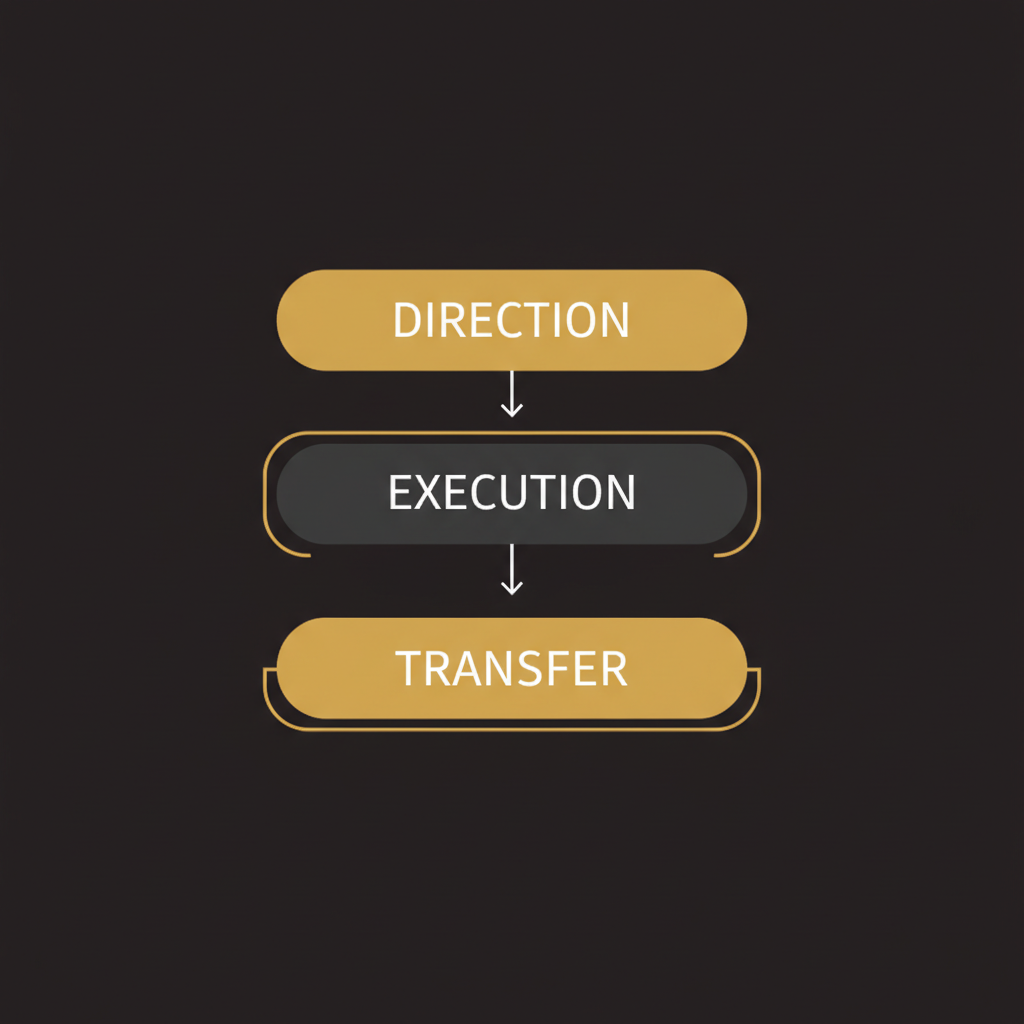
The productive framing is not “AI or human” for marketing leadership. It is “human for strategy, AI for execution speed.” The best fractional CMOs in 2026 are not competing with AI agents. They are using them to deliver 3 times the output they could have delivered in 2023, while applying human judgement to every decision that requires context, trade-offs, or people skills.
Here is what that looks like in practice, based on how we structure engagements through our three-pillar methodology.
The Human Sets Direction
Channel strategy, budget allocation, positioning, messaging hierarchy, team structure, hiring priorities. These are decisions that require commercial context, competitive awareness, and the ability to say “no” to options that look good on paper but do not fit reality. A human fractional CMO makes these calls.
AI Agents Accelerate Execution
Content production, ad variant generation, data analysis, competitor tracking, reporting, prompt engineering for repeatable workflows. These are tasks that benefit from speed and scale. AI agents handle them, within frameworks the human designed and under quality standards the human set.
The Human Transfers Capability
The fractional CMO trains the internal team to operate the AI tools, evaluate their outputs, and improve the workflows over time. This is the piece that no AI agent can do for you. You cannot automate the process of teaching a human to think critically about automated output. That requires another human who has done the thinking already.
We have mentored over 100 marketers across 15 countries through MentorCruise, holding a top-1% mentor rating with 67 five-star reviews. The consistent finding: capability transfers through practice with guided human correction. Not through documentation alone, and certainly not through an AI agent telling your team what to do.
A Practical Comparison: AI Agent Alone vs Human + AI
To make this tangible, consider a £3M revenue B2B SaaS company with a 3-person marketing team deciding between subscribing to an AI marketing agent platform and hiring a fractional CMO who uses AI tools.
| Scenario | AI Agent Alone (£300/month) | Fractional CMO + AI (£5,000/month) |
|---|---|---|
| Month 1 output | Content calendar, 12 blog drafts, weekly reports, competitor digest | Strategic audit, prioritised channel plan, 8 blog drafts with AI, team assessment |
| Month 3 output | Same as month 1 with minor refinements | Team running content workflow independently, CMO focusing on paid strategy |
| Month 6 output | Same as month 1; no capability change in team | Team operates AI workflows solo; CMO engagement winding down |
| After engagement ends | Cancel subscription, lose all automated workflows | Team retains all capability, SOPs, and workflows permanently |
| Strategic quality | Generic recommendations based on data patterns | Context-specific strategy adapted to company stage and team |
| Team development | None | Measurable skill improvement across 3 team members |
| Total 6-month cost | £1,800 | £30,000 |
The AI agent is cheaper. Dramatically so. But the output at month 6 and beyond tells the real story. The cheapest option is not the one with the lowest invoice; it is the one that leaves your team more capable than it found them.
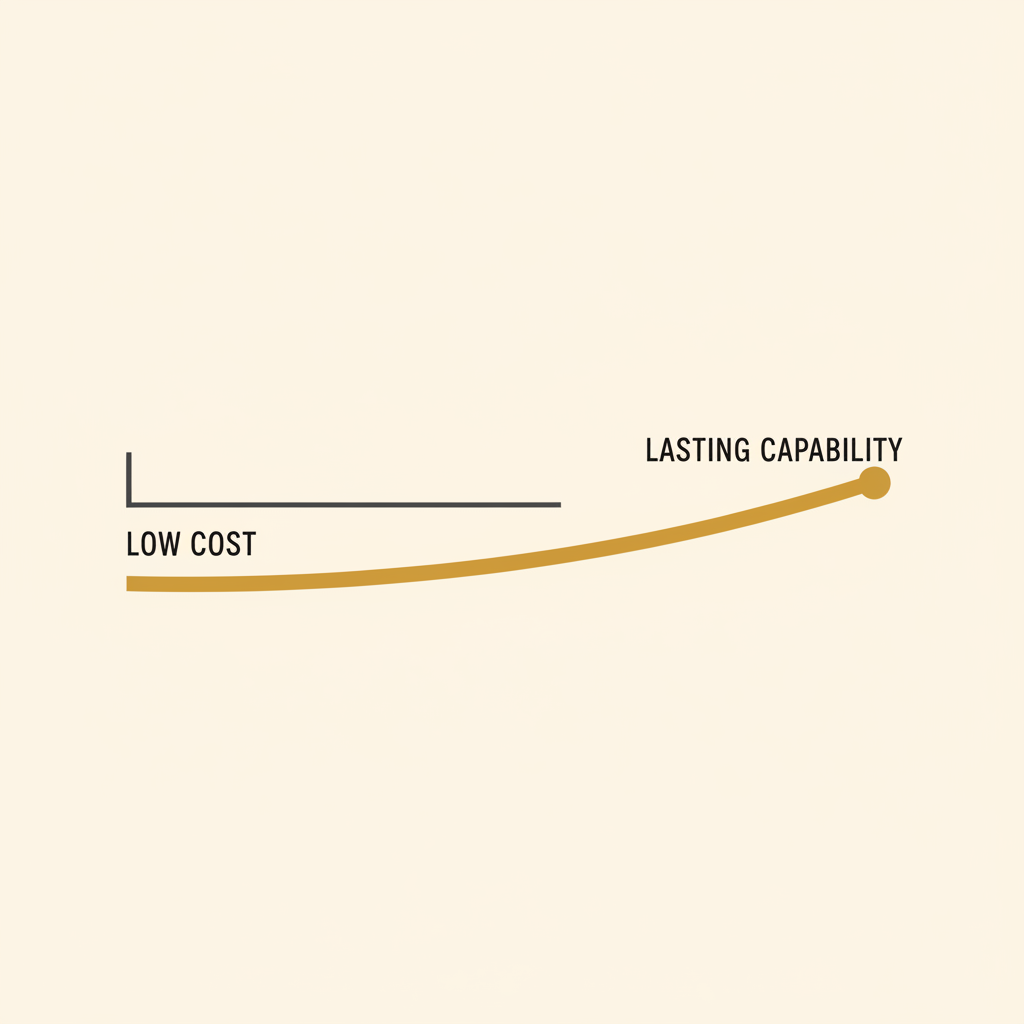
A founder running a lean operation might reasonably start with AI agents for execution while they find the right human leader. That is sensible. Using AI agents as a bridge is different from using them as a replacement. The problem arises when the bridge becomes permanent because the AI output is “good enough” and nobody inside the business has the expertise to recognise what “good enough” is leaving on the table.
When AI Agents Might Be Enough (Honestly)
Intellectual honesty requires acknowledging the cases where an AI agent, without a human fractional CMO, could be sufficient. They exist, even if they are narrower than the AI tool vendors claim.
Solo founders pre-product-market-fit. If you are a one-person company testing demand, an AI agent can generate landing page copy, draft email sequences, and produce social content. You do not need strategic marketing leadership. You need basic content production while you validate your business model.
Very early-stage companies with no marketing budget. If the choice is between an AI agent at £200 a month and nothing at all, the agent is obviously better. This is not a strategy question. It is a survival question.
Businesses with a strong internal marketing leader who just needs execution speed. If you already have a VP of Marketing or an experienced head of marketing and they know exactly what to do but lack bandwidth, AI agents added to their toolkit can be transformative. The human judgement layer already exists. The AI accelerates what that human directs.
Outside these scenarios, using an AI agent as your marketing leader is a risk that increases with your company’s complexity, team size, and revenue. The stakes get higher, and the cost of subtly wrong strategy compounds over quarters.
Frequently Asked Questions
Can an AI agent actually replace a fractional CMO?
Not as of 2026. AI agents handle execution tasks well: content drafting, data summarisation, reporting, competitor monitoring. They cannot set strategy, manage people, read organisational dynamics, or make trade-offs under ambiguity. These are the core functions of a CMO.
What is an AI fractional CMO?
The term is used in two ways. Some AI tool vendors use it to describe an autonomous AI agent that claims to provide CMO-level strategy. Others use it to describe a human fractional CMO who uses AI tools to work faster and builds your team’s AI capability. The human version is the one that actually delivers strategic value.
What marketing tasks can AI agents handle on their own?
AI agents are strong at content first drafts, ad copy variations, data pattern recognition, reporting automation, and competitive monitoring. These are structured execution tasks with clear inputs and outputs. Tasks requiring judgement, context, or people skills still require a human.
How much does an AI marketing agent cost compared to a fractional CMO?
AI agent platforms typically cost £100 to £500 per month as of 2026. A human fractional CMO costs £3,000 to £10,000 per month. The cost difference is significant, but the outputs differ equally. The AI agent produces volume; the human provides strategy, judgement, and capability transfer.
What are the risks of using an AI agent instead of a human CMO?
The primary risk is confidently wrong strategy. AI agents produce well-formatted, assured recommendations that may be based on flawed logic, outdated patterns, or irrelevant data. Without a human with marketing expertise reviewing the output, errors compound over time and are difficult to detect.
When might an AI agent be enough for marketing?
Solo founders pre-product-market-fit, very early-stage companies with minimal budget, or businesses that already have a strong internal marketing leader who just needs faster execution. Outside these scenarios, the absence of human strategic judgement is a growing risk.
What should I look for in a fractional CMO who uses AI?
Ask for a capability transfer plan. The best fractional CMOs in 2026 use AI to accelerate execution, then train your team to operate those same AI workflows independently. When they leave, your team keeps the capability. That combination of human strategy and AI execution is the model that works.
Will AI agents eventually replace human marketing leadership?
Possibly for certain functions, but not in the near term. Strategic marketing requires contextual judgement, stakeholder management, and the ability to make uncomfortable trade-offs. These are capabilities AI research has not solved. As of 2026, the practical answer is to pair AI execution with human leadership.
Ready to Build AI Capability That Stays?
We pair human marketing leadership with AI-driven execution, then transfer the whole system to your team. No indefinite retainers, no dependency. If you want marketing capability that outlasts the engagement, we should talk.