Last updated: 2026-03-26
TL;DR
- Brand positioning is too foundational to outsource to someone who does not live your business.
- Budget allocation between channels requires commercial context only you have.
- Your attribution model shapes every downstream decision; own it or be misled.
- Audience definition drifts when no one with customer proximity is steering it.
- AI and automation adoption choices made by vendors tend to serve the vendor.
Why This Matters More in 2026 Than It Did 5 Years Ago

A decade ago, a founder could reasonably say: “I hired smart people; let them figure it out.” Marketing channels were more stable. Google’s algorithm updates were quarterly events, not continuous. Social platforms had organic reach worth investing in. The margin for error was wider.
That margin has collapsed. Marketing in 2026 moves faster than most leadership teams can track, which makes the structural decisions more important, not less. Google’s AI Overviews now dominate above-the-fold search results for 47% of commercial queries, according to BrightEdge’s 2025 Generative Search Report. Meta’s ad costs have risen 23% year-over-year as of Q4 2025, per WordStream’s Facebook Ads Benchmark Report. Privacy regulations continue tightening across the EU and the UK.
When the ground shifts this often, tactical execution can adapt. But if the structural decisions behind that execution are wrong, adaptation just means doing the wrong thing faster.
This is not a call for micromanagement. Quite the opposite. When you own the right 5 decisions and delegate everything else with clarity, your team moves faster because they are not guessing at your intent. They are executing against it.
Decision 1: Brand Positioning
What this actually means
Brand positioning is not your logo, your colour palette, or your tagline. It is the answer to: “Why should a specific type of customer choose us over every alternative, including doing nothing?” It defines who you are for, what you stand for, and what you deliberately do not do.
No agency, no matter how talented, can answer that question for you. They can help you articulate it. They can pressure-test it. But the raw material has to come from someone who understands the business at a cellular level: its economics, its customers, its constraints, its ambitions.
What goes wrong when you delegate it
We have seen this pattern dozens of times across our digital marketing work. A founder hires a branding agency, gives them 2 weeks and a brief, and gets back a positioning statement that reads like a horoscope: flattering, vague, applicable to anyone. “We empower businesses to achieve their full potential” could describe a gym, a bank, or a dog trainer.
The real cost is not the agency fee. It is that every campaign, every landing page, every email built on top of a hollow positioning statement performs worse than it should. And nobody can diagnose why because the foundation looks professional.
What to do instead
Own the positioning conversation. Use a framework like April Dunford’s “Obviously Awesome” methodology to force specificity. Your agency or marketing lead can facilitate the process, but you provide the answers. Revisit positioning annually, or whenever your competitive set, pricing, or target customer changes significantly.

Decision 2: Channel Budget Allocation
Why this is not a “marketing” decision
How you split your marketing budget between channels is a commercial decision with marketing implications, not the other way around. It determines your customer acquisition cost, your payback period, your cash flow, and your growth trajectory. According to Gartner’s 2025 CMO Spend Survey, the average marketing budget is 7.7% of company revenue, down from 9.1% in 2023. When the total is shrinking, where you put each pound matters more.
Agencies have an inherent conflict of interest when recommending budget allocation. A paid media agency will always see a case for more paid media spend. An SEO agency will always find more SEO work to do. This is not malice; it is structural incentive. Even the most ethical agency sees the world through its own lens.
The founder context that cannot be replicated
You know things your agency does not. You know your cash position, your seasonal patterns, your upcoming product launches, your board’s expectations for this quarter versus next year. A CFO does not brief the media agency. But all of those factors should shape where marketing money goes.
One client we worked with was spending 60% of their budget on paid search. Their agency reported strong ROAS numbers. What the agency did not know was that the business had a 14-month payback period on new customers and was about to hit a cash crunch. We shifted 30% of that budget into email nurture and retention campaigns. Twelve months later, revenue was flat but profit was up 22%.
What to do instead
Set the allocation yourself, informed by your commercial priorities. Share your reasoning with your marketing team or agency. Review it quarterly. Accept input and challenge from your team, but make the final call. This is the one area where a Fractional CMO can be genuinely valuable: someone with the seniority to advise on allocation without a channel-specific bias.
Decision 3: Attribution Model Selection
The decision that shapes all other decisions
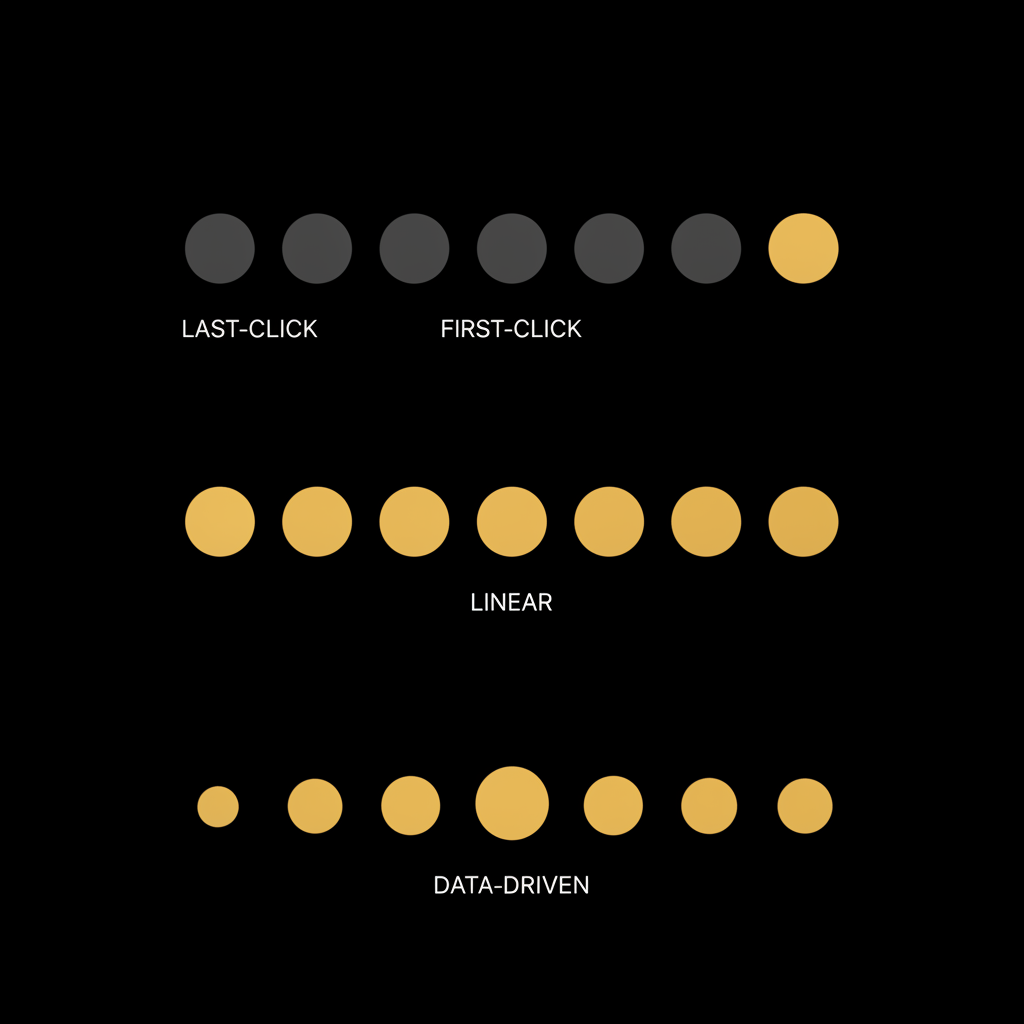
Your attribution model determines which channels get credit for conversions. It sounds technical. It is political. Choose last-click attribution, and your paid search team looks brilliant while your brand campaigns look useless. Choose first-click, and the opposite happens. Choose a data-driven model, and you are trusting an algorithm that even Google’s own documentation admits is a black box.
This is why you cannot delegate it. If your agency selects the attribution model and also reports on campaign performance, they are both setting the rules and keeping score. That is not accountability; it is a closed loop.
What most businesses get wrong
According to Ruler Analytics’ 2025 attribution survey, 62% of marketers still rely on single-touch attribution models despite the well-documented limitations. Many do not even realise they have made a choice; they are using whatever was the default in their analytics platform.
GA4’s data-driven attribution model, which became the default after Google sunset last-click in 2023, is better than single-touch. But it still obscures the reasoning behind its credit distribution. If you cannot explain why a channel gets credit, you cannot make confident budget decisions based on that credit.
What to do instead
Understand the 3 or 4 most common models (last-click, first-click, linear, data-driven). Pick one that aligns with your sales cycle and business model. Document why. Make sure your team and your agency are reporting against the same model. Review it when your channel mix changes. Our attribution modelling glossary entry breaks down the specifics.
Decision 4: Audience Definition and Segmentation
Your audience is not a demographic profile
“Women aged 25 to 45 interested in wellness” is not an audience. It is a media-buying shorthand that tells you nothing about motivation, purchase triggers, or competitive consideration. Real audience definition requires understanding the problems your product solves, for whom, and under what circumstances.
Audience drift is the silent killer of marketing performance. It happens when your agency or team gradually broadens targeting to maintain volume, without anyone with customer proximity noticing that the leads are getting worse.
Why founders lose control of this
It starts innocently. Your agency runs a campaign targeting your core segment. Performance plateaus. They suggest expanding to “adjacent” audiences. Results look good on paper because impressions and clicks go up. But lead quality drops, sales cycles lengthen, and six months later your cost per acquired customer has risen 40% while everyone is celebrating the “growth” in top-of-funnel metrics.
We saw this with a B2B SaaS client running LinkedIn ads. Their agency expanded targeting from IT directors at mid-market firms to “anyone in technology roles.” Lead volume tripled. But the sales team’s close rate dropped from 8% to 2.1%. Net revenue from LinkedIn actually declined. The conversion rate told the true story that the vanity metrics obscured.
What to do instead
Define your primary audience segments yourself, based on actual customer data and sales team feedback. Give your agency or team explicit boundaries: who you are targeting, who you are not, and what triggers a conversation before expanding. Review audience performance monthly, looking at downstream metrics (revenue, close rate, LTV) rather than just lead volume.
Decision 5: AI and Automation Adoption
The gold rush problem
Every marketing tool vendor in 2026 is selling AI features. Every agency is pitching AI-powered services. Some of these are genuinely useful. Many are thin wrappers around foundation models with a markup. A few are actively harmful to your brand if deployed without oversight.
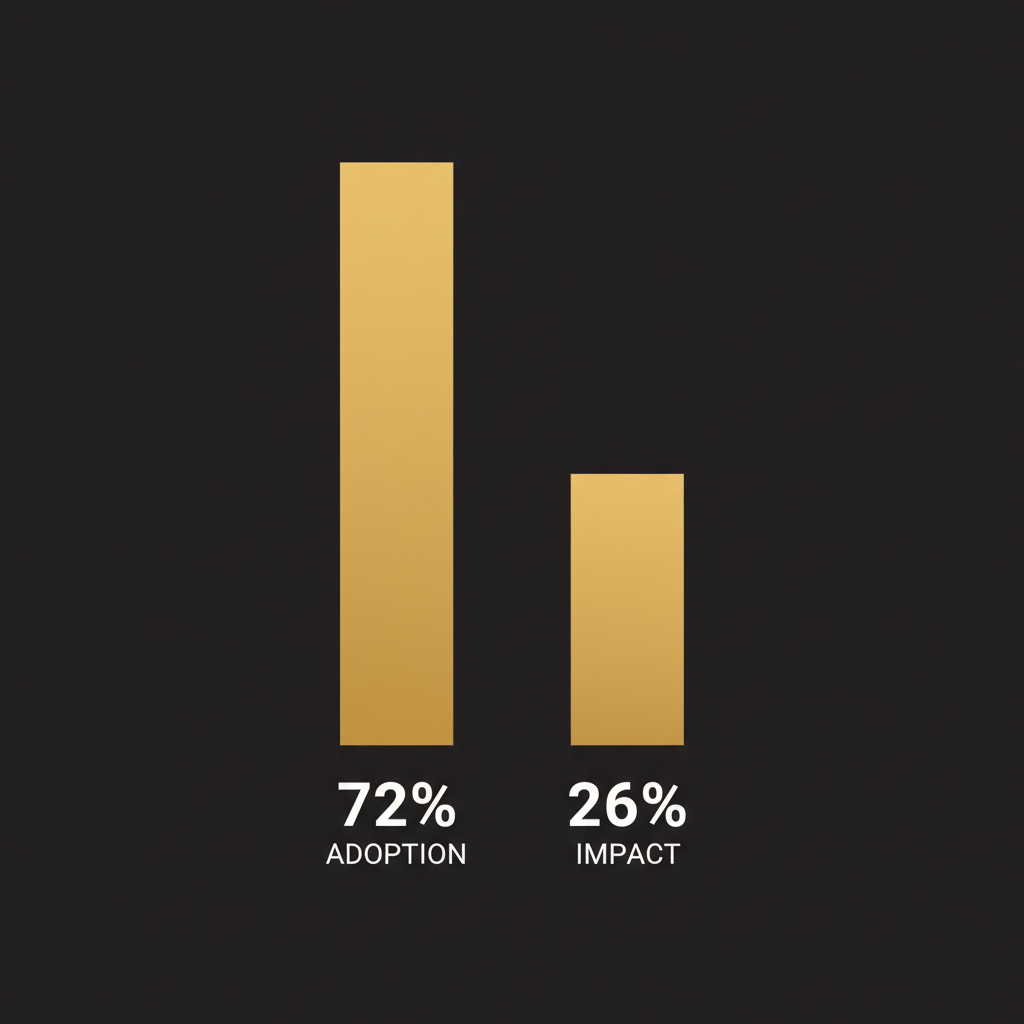
According to McKinsey’s 2025 State of AI report, 72% of organisations now use AI in at least one business function, up from 55% in 2023. But the same report noted that only 26% have seen meaningful revenue impact. The gap between adoption and value is enormous.
The decision of where and how to use AI in your marketing is a strategic choice, not a tactical one. It affects your brand voice, your data privacy posture, your team’s skill development, and your competitive positioning.
What goes wrong when you delegate it
When you let your agency decide which AI tools to use, they will pick tools that make their work faster and cheaper. That is rational for them. But cheaper agency delivery does not automatically translate to better outcomes for you. AI-generated content that sounds generic damages your brand. AI-powered bidding algorithms that you do not understand make your spend opaque. AI-driven personalisation without proper data governance creates compliance risk.
We work through exactly these trade-offs in our AI transformation advisory. The recurring pattern is that businesses adopt tools before defining what they actually need the tools to do.
What to do instead
Start from the problem, not the technology. Identify the 3 biggest bottlenecks or quality gaps in your current marketing. Then evaluate whether AI can address those specific gaps. Set clear policies on AI content (where it can be used, where it cannot, what review process applies). Own the vendor selection. Your team implements; you decide what gets implemented.
What You Should Delegate (and How to Do It Well)
This article could leave you feeling like you need to control everything. You do not. In fact, holding on to tactical decisions is just as damaging as letting go of strategic ones.
Here is the split:
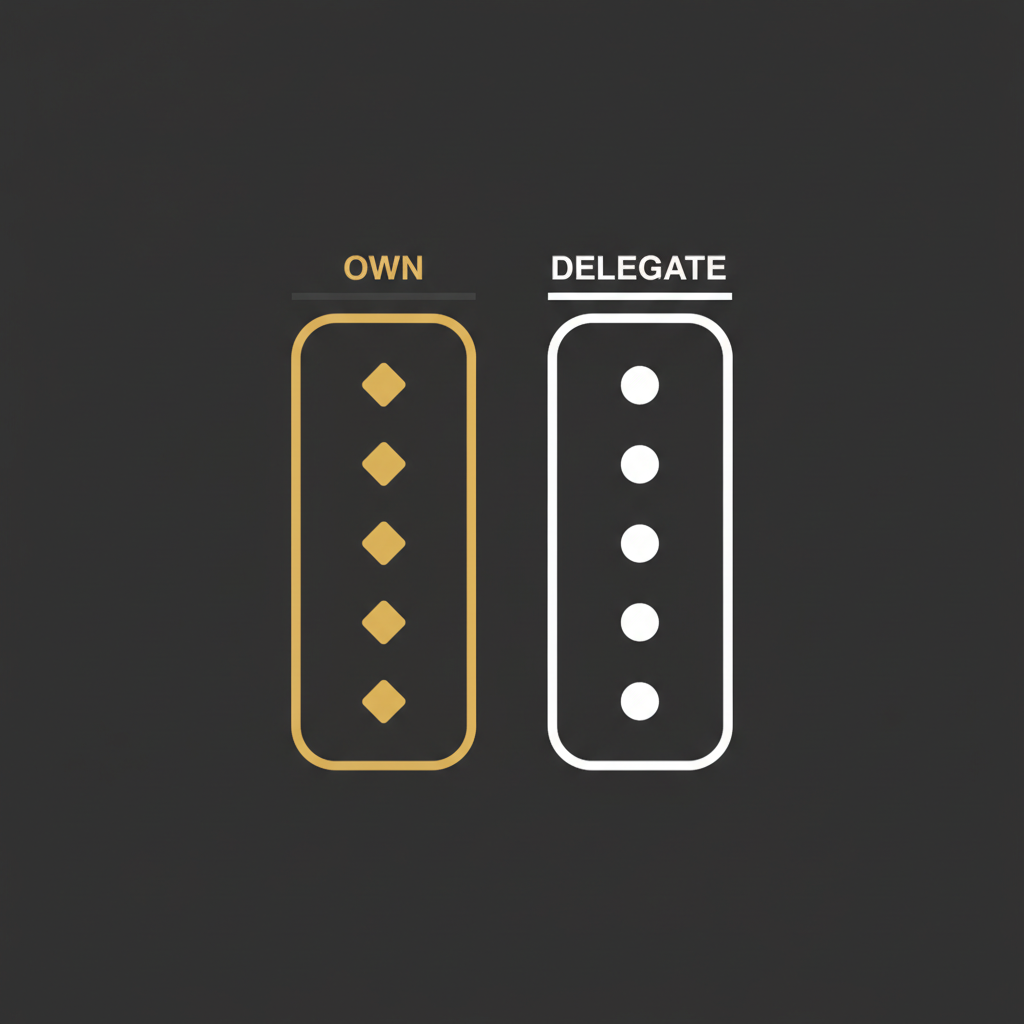
| Own It (Never Delegate) | Delegate It (With Clear Briefs) |
|---|---|
| Brand positioning | Campaign creative and copy |
| Channel budget allocation | Campaign setup and optimisation |
| Attribution model selection | Reporting and analysis |
| Audience definition | Audience research and testing |
| AI/automation adoption decisions | Tool implementation and workflow design |
The key is that delegation works when your team or agency has a clear strategic frame to operate within. When you have made the 5 decisions above and communicated them explicitly, everything else moves faster because the guardrails are in place.
This is the foundation of how we approach our three-pillar methodology. We build the strategic frame with you, transfer the capability to execute within it, and then step back. The decisions that matter stay with you. The execution scales through your team.
The Cost of Getting This Wrong
We are not talking about theoretical risk. The businesses that struggle most with marketing are not the ones with bad agencies or bad teams. They are the ones where nobody is sure who owns the structural decisions.
The symptoms are always the same: campaigns that feel disconnected from the business, reports that everyone reads but nobody trusts, quarterly strategy changes that reset progress, and a growing sense that the budget is evaporating without proportional results.
If you recognise this pattern, the answer is not to fire your agency or restructure your team. It is to reclaim the 5 decisions above, communicate them clearly to everyone involved, and let execution follow from there.
Frequently Asked Questions
Should I make these decisions alone or involve my team?
Involve your team. The point is not isolation; it is ownership. Gather input from your marketing lead, your sales team, and your agency. But the final call on these 5 decisions rests with you because only you hold the full commercial context.
What if I do not have the marketing knowledge to make these decisions confidently?
That is exactly when a Fractional CMO or senior marketing advisor adds the most value. They help you build the knowledge to make informed decisions without creating a dependency. The goal is your capability, not ongoing reliance on an external expert.
How often should I revisit these 5 decisions?
Review brand positioning and audience definition annually or when your market shifts significantly. Review budget allocation and attribution quarterly. Review AI and automation adoption whenever new tools are proposed or existing ones are up for renewal.
Does this apply if I have a full-time CMO?
If your CMO has genuine commercial authority and board-level context, they can own most of these decisions in partnership with you. The principle is the same: these decisions require someone with both marketing expertise and business context. Most agency relationships do not provide that combination.
What is attribution modelling and why does it matter so much?
Attribution modelling is the method used to assign credit for a conversion to specific marketing touchpoints. It matters because it directly determines which channels appear to be performing well and which do not. The wrong model can make you over-invest in one channel and under-invest in another without realising it.
Can I delegate these decisions to a trusted agency partner?
Even the best agency has structural incentives that differ from yours. They can advise, challenge, and provide data. But the final decision on positioning, budget allocation, attribution, audience, and AI adoption should sit with someone whose only incentive is the overall health of your business.
How do I communicate these decisions to my agency or team?
Document each decision in a simple one-page brief: what you decided, why, and what boundaries it sets for execution. Share it at the start of each quarter. A good agency will welcome this clarity because it reduces ambiguity and rework.
Is this relevant for businesses spending under 50,000 GBP per year on marketing?
Yes, arguably more so. Larger budgets can absorb some waste from poor structural decisions. Smaller budgets cannot. If you are spending 50,000 GBP or less, every allocation choice has outsized impact on your results.
Ready to Take Back Control of the Decisions That Matter?
We help founders and marketing leaders build the strategic clarity and internal capability to own their marketing, permanently. If you want to stop guessing and start deciding with confidence, let’s talk.