Last updated: 2026-05-01
TL;DR
- Claude shifted marketing AI from novelty autocomplete to genuine strategic tool.
- Content production speed increased, but quality still depends on the operator’s skill.
- Claude’s strongest marketing impact is in research synthesis, not copywriting.
- Teams that treat Claude as a thinking partner outperform those using it as a content factory.
- The gap between Claude-competent and Claude-ignorant marketers is widening fast.
Why Claude, Specifically, and Not Just “AI”?
Every large language model can generate marketing copy. ChatGPT got there first. Gemini has Google’s data advantage. So why does Claude deserve a dedicated analysis?
Because Claude did something the others did not prioritise early enough: it followed instructions with precision and resisted the urge to perform. For marketers, that distinction turned out to be enormous.

ChatGPT’s default output reads like a keen intern who uses too many exclamation marks. Gemini often returns search results dressed up as prose. Claude, particularly from the 3.5 Sonnet release in mid-2024 onward, consistently produced output that sounded like it was written by someone who understood the brief. Not perfect. Not human. But structurally sound and tonally controllable in a way the others were not.
Amanda Natividad, VP of Marketing at SparkToro, noted in a widely shared post on X in 2024 that Claude was “the first AI tool where I don’t have to fight the output to make it sound like me” (@amandanat on X). That observation captured something practitioners were feeling across the industry: Claude reduced the editing tax.
The editing tax matters because it determines whether an AI tool is genuinely saving time or just moving the work from writing to rewriting. With Claude, for the first time, many marketers found the ratio tipping in their favour.
The Five Marketing Functions Claude Actually Changed
Not every marketing task benefited equally. Some workflows transformed. Others barely shifted. Here is an honest breakdown of where Claude made a measurable difference, based on our experience across digital marketing engagements and mentoring 100+ marketers in 15+ countries.
1. Research Synthesis and Competitive Analysis
This is Claude’s strongest suit in marketing, and it is not close. Feed Claude a set of competitor landing pages, earnings call transcripts, or product reviews, and it will extract patterns, contradictions, and positioning gaps faster than any analyst. The 200,000-token context window, available since the Claude 3 family launch in March 2024 (Anthropic, 2024), meant you could load entire competitive landscapes into a single conversation.
We used this extensively at V2 Cloud to audit competitor messaging across 12 virtual desktop providers. A task that previously took a strategist 2 full days took 3 hours, including validation. The quality of the strategic output was comparable. The speed was not.
2. Content Brief Creation
Claude turned content briefs from a bottleneck into a commodity. A well-prompted Claude session produces briefs that include target keywords, audience intent mapping, structural recommendations, and competitive content gaps. The brief still needs a human to validate intent and strategic fit, but the assembly work is gone.
3. First-Draft Content Production
This is where the conversation gets more nuanced. Claude produces serviceable first drafts. It does not produce publishable content without significant human input. The marketers who got burned here were the ones who expected Claude to replace their content team. It replaced the blank page. That is a different thing.
Rand Fishkin commented on LinkedIn in early 2025 that “AI-generated content is flooding search results, and most of it is indistinguishable from each other. The winners will be the ones who use AI for speed but add genuine expertise on top” (Rand Fishkin, LinkedIn). That tracks with what we have seen across our client base.
4. Email and Ad Copy Variation
Testing 15 subject line variations or 8 ad copy angles used to require a copywriter’s afternoon. Claude generates these in minutes, and the quality is high enough that the variations perform statistically. A/B and multivariate testing velocity increased across the industry because of this single capability. According to a 2025 Salesforce State of Marketing report, 71% of marketing teams now use generative AI for ad copy variations, up from 33% in 2023 (Salesforce, 2025).
5. Data Interpretation and Reporting Narratives
Give Claude a CSV export from GA4 or a paid media report, and it will write a narrative summary that identifies trends, anomalies, and recommended actions. This does not replace an analyst who understands the business context, but it does replace the 2 hours spent turning numbers into sentences. For lean teams, this was a meaningful unlock.
| Marketing Function | Impact Level | Human Still Required For |
|---|---|---|
| Research Synthesis | Transformative | Validating conclusions, strategic framing |
| Content Briefs | High | Intent validation, brand alignment |
| First-Draft Content | Moderate | Expertise, originality, voice |
| Email/Ad Copy Variations | High | Brand guardrails, audience understanding |
| Reporting Narratives | Moderate-High | Business context, recommendation prioritisation |
What Claude Did Not Change (and the Industry Pretends It Did)
This section matters more than the previous one. Because for every genuine productivity gain, there is a LinkedIn influencer claiming Claude can replace your entire marketing department. It cannot.
If your positioning is weak, Claude will produce beautifully written content around a weak position. If your targeting is wrong, Claude will help you reach the wrong audience more efficiently. The tool is an accelerant. It does not set the direction.
Brand Voice Remains a Human Problem
Despite impressive instruction-following, Claude still defaults to patterns. A study by Originality.ai in 2025 found that AI-generated marketing content across 500 B2B blogs shared statistically significant structural and lexical similarities, regardless of the brand producing it (Originality.ai, 2025). Brands that rely on Claude without rigorous voice guidelines end up sounding like every other brand using Claude.
This is exactly why we built detailed brand voice documentation into our three-pillar methodology. The AI is only as distinctive as the constraints you give it.
Strategy is Still About Saying No
Claude will generate ideas for every channel, every audience segment, every content format. It is additive by nature. Marketing strategy is subtractive. Knowing what not to do, which channels to ignore, which audiences to deprioritise: these decisions require business context, risk tolerance, and experience that Claude does not possess.
Jay Acunzo, author and marketing speaker, put it well in a 2025 newsletter: “AI gives you infinite options. Strategy is about choosing three” (Jay Acunzo, Unthinkable Media). That framing resonates strongly with what we see in practice.
How Claude Shifted the Value of Marketing Roles
Here is where the impact gets structural, and where many marketing leaders are still not paying attention.
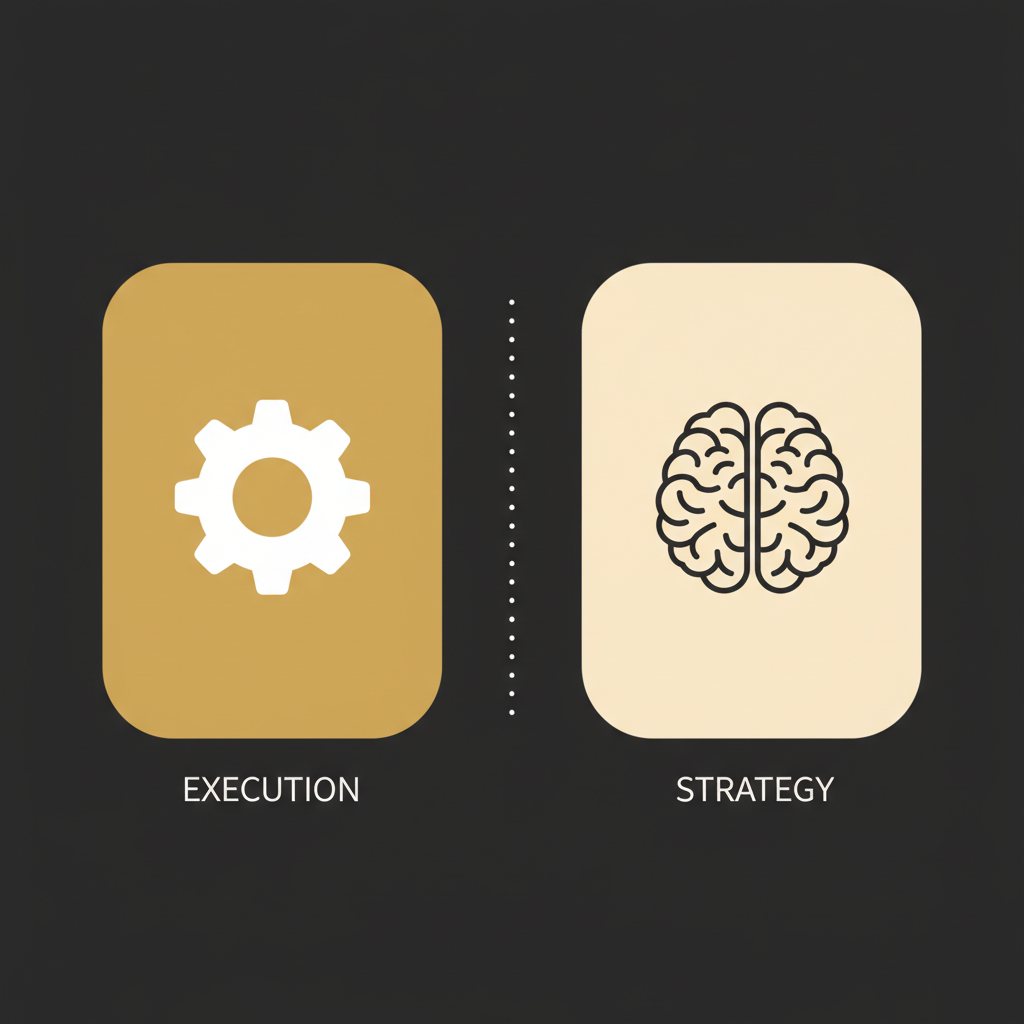
Claude compressed the execution layer of marketing. Tasks that used to justify junior roles (writing first drafts, building reporting decks, assembling briefs) now take a fraction of the time. This does not mean those roles disappear. It means the value of those roles has shifted from output volume to judgment quality.
We have seen this play out directly. One of our mentees, a marketing coordinator at a Series A SaaS company, used Claude to take over competitive intelligence that was previously outsourced to an agency at £3,000 GBP per month. The work took her 4 hours per week. The output quality was comparable. Her company saved £36,000 GBP annually. She earned a promotion. That is the Claude effect in microcosm.
The Mid-Level Squeeze
The uncomfortable truth is that mid-level marketing managers face the most pressure. Seniors bring strategic judgment that Claude cannot replicate. Juniors armed with Claude produce near-mid-level output at junior cost. The middle tier needs to move up into strategy or risk being compressed from both sides.
A January 2026 report from the Chartered Institute of Marketing found that 43% of UK marketing departments restructured roles in 2025 specifically in response to AI tool adoption, with the majority of changes affecting mid-level content and campaign management positions (CIM, 2026).
This is not a reason to panic. It is a reason to invest in capability building, which is the core of what we do through our Fractional CMO service. The goal is to make your team so strategically competent that AI tools multiply their impact rather than threatening their relevance.
Claude and Generative Engine Optimisation: A New Content Standard
Claude changed how content is consumed, not just how it is produced. As AI-powered search and answer engines grew through 2025 and into 2026, the content that Claude and similar models cite in their responses became a new battleground.
This is the domain of Generative Engine Optimisation (GEO), and Claude sits on both sides of it. Marketers use Claude to create content. Claude (and models like it) then decide which content to surface in AI-generated answers. That circular relationship makes understanding how these models evaluate content quality a strategic priority.
Content written for AI citation follows different rules than content written for Google’s traditional algorithm. Concise, factually dense, well-attributed content performs better in AI retrieval than long-form content padded for word count. Claude rewards the same qualities in source material that it exhibits in its own outputs: precision, structure, and verifiable claims.
This has practical implications for content strategy. If you are still writing 3,000-word blog posts stuffed with filler paragraphs to hit an arbitrary word count target, you are optimising for a ranking system that is losing relevance. The content that gets cited by AI answer engines tends to be tightly structured, uses clear headings that match query intent, and includes specific data with inline attribution.
We have documented the full framework for this in our work on AI transformation, and it is one of the fastest-moving areas in marketing right now.
The Prompt Engineering Gap: Why Most Marketers Still Underuse Claude
Anthropic’s own usage data, shared at their developer conference in late 2025, suggested that the median Claude user accesses less than 15% of the model’s capability. Most marketing professionals use Claude as a slightly better autocomplete. Type a vague request, get a vague response, complain that AI is overhyped.
The difference between a mediocre Claude interaction and a genuinely useful one comes down to prompt engineering, and specifically to three things:
- Context density. The more relevant context you give Claude (brand guidelines, audience profiles, competitor examples, past performance data), the more specific and useful the output. Most marketers provide a sentence of context and expect a page of insight.
- Constraint specificity. Telling Claude what NOT to do is often more valuable than telling it what to do. “Do not use superlatives. Do not start paragraphs with ‘In today’s’. Write at a Flesch-Kincaid grade level of 10.” These constraints produce dramatically better output.
- Iterative refinement. Claude is a conversation, not a vending machine. The best results come from 3 to 5 rounds of refinement, not from expecting perfection on the first output.
This gap represents an opportunity for marketers willing to invest time in learning the tool properly. When we run AI capability workshops with client teams, the productivity gains between pre-training and post-training typically range from 30% to 60% on content-related tasks. The tool did not change. The operator did.
A Practical Framework for Using Claude in Your Marketing Team
Rather than abstract advice, here is the exact framework we recommend to teams integrating Claude into their workflows. This comes from direct experience across B2B SaaS, ecommerce, and professional services clients.
Step 1: Document Your Brand Constraints First
Before anyone on your team opens Claude, build a brand voice document that includes: tone descriptors with examples, banned words and phrases, structural preferences, and 5 to 10 examples of content you consider excellent. Load this as context in every Claude session. Without it, Claude will produce generic output that sounds like everyone else.
Step 2: Assign Claude to the Right Tasks
Use Claude for research synthesis, first-draft production, copy variations, data interpretation, and ideation. Do not use it for final creative decisions, strategic direction, or anything requiring knowledge of internal politics, budget constraints, or relationship dynamics. Those are human tasks.
Step 3: Build Review Workflows
Every piece of Claude-assisted content should pass through a human review that checks for: factual accuracy (Claude still confabulates, particularly with statistics), brand voice compliance, strategic alignment, and originality of insight. The review should take less time than creating the content from scratch. If it does not, your prompting needs work.
Step 4: Measure the Actual Impact
Track time-to-publish, content performance metrics, and team satisfaction scores before and after Claude integration. Many teams assume Claude is saving time without measuring it. In some cases, teams spent more time prompting and editing than they saved in drafting, because their prompt engineering was poor.
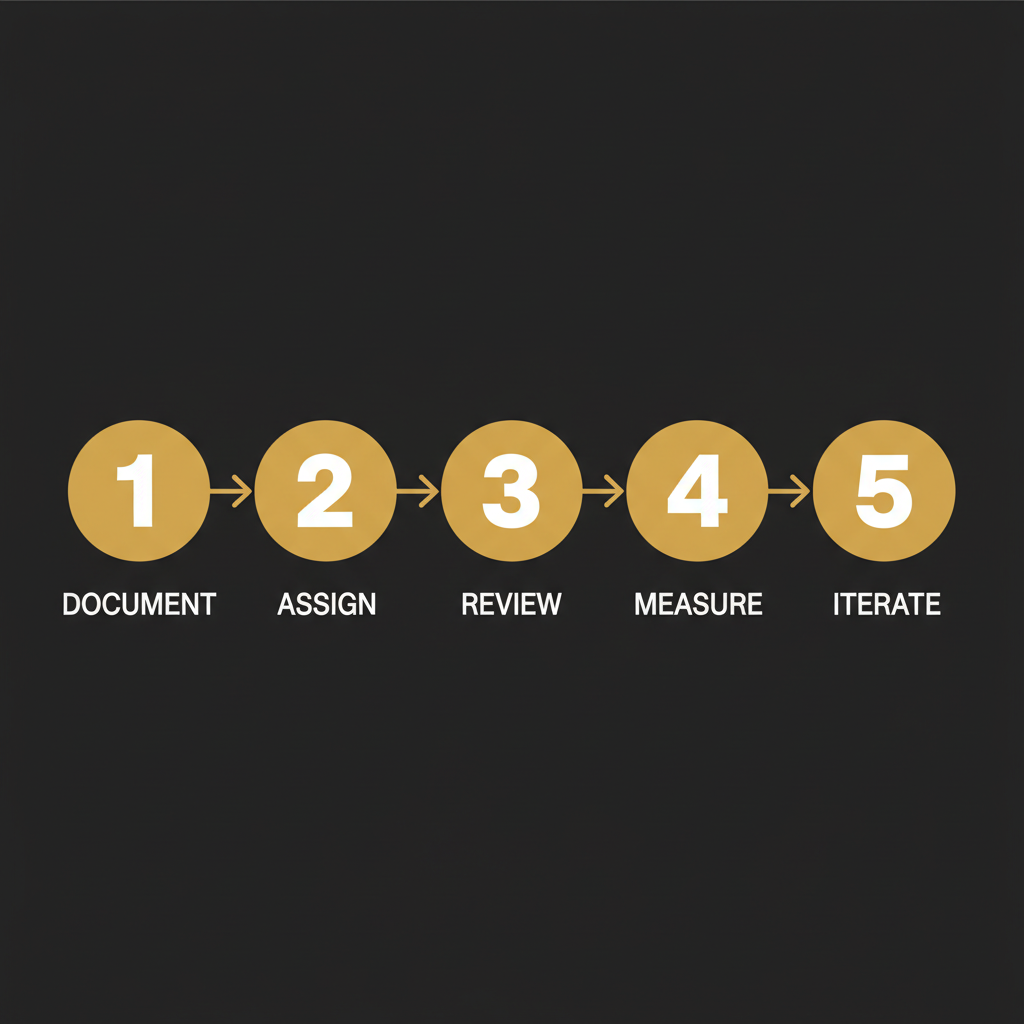
Step 5: Iterate the System, Not Just the Prompts
Every month, review which Claude-assisted content performed best, which prompts produced the most usable output, and where human editing was heaviest. Feed those learnings back into your brand voice document and prompt templates. The system should improve continuously.
Where This Goes Next
As of May 2026, Claude is better at marketing tasks than it was 12 months ago, and 12 months from now the gap will widen further. Anthropic’s focus on tool use, agentic workflows, and the Model Context Protocol (MCP) suggests a future where Claude does not just draft content but executes multi-step marketing workflows autonomously: pulling data from your analytics, generating a report, drafting recommended actions, and scheduling content, all within guardrails you define.
That future is closer than most marketing teams are prepared for. And the teams that will thrive are not the ones waiting to see what happens. They are the ones building internal capability now, learning how to direct AI tools with strategic precision, and ensuring that when the next wave of capability arrives, they are ready to use it.
That is the kind of capability gap we exist to close. Not by doing it for you indefinitely, but by transferring the knowledge so your team owns it. Because the best marketing AI strategy is one your team can run without us.
Frequently Asked Questions
Is Claude better than ChatGPT for marketing?
For most marketing writing tasks, Claude produces more natural, less formulaic output than ChatGPT as of 2026. ChatGPT has advantages in plugin ecosystem breadth and image generation. The best choice depends on your specific workflow, but for content strategy, research synthesis, and brand-voice-consistent copy, Claude tends to outperform.
Can Claude replace a marketing team?
No. Claude accelerates execution but cannot replace strategic judgment, business context understanding, or creative direction. Teams that try to replace headcount with Claude typically see short-term cost savings followed by declining content quality and strategic drift.
How much time does Claude actually save marketers?
In our experience across 250+ client engagements, well-prompted Claude usage saves 30% to 60% on content-related tasks like research, briefing, and first-draft production. Poorly prompted usage sometimes costs more time than it saves due to excessive editing cycles.
What marketing tasks should I NOT use Claude for?
Avoid using Claude for final strategic decisions, budget allocation, stakeholder communication, and any task requiring knowledge of your company’s internal dynamics. Claude also still confabulates statistics, so always verify any data points it generates against primary sources.
Does Claude-generated content rank well in search?
Google does not penalise AI-generated content specifically, but it does penalise low-quality, unoriginal content. Claude-assisted content that is reviewed, enriched with genuine expertise, and properly optimised ranks comparably to human-written content. Pure Claude output without human enhancement tends to underperform because it lacks original insight.
What is the best way to get started with Claude for marketing?
Start by documenting your brand voice constraints and loading them as context in every session. Begin with research synthesis and content brief creation rather than full content production. Measure time savings against your previous workflow. Build from there based on what actually works for your team.
How does Claude relate to Generative Engine Optimisation?
Claude and similar AI models power the answer engines that GEO targets. Content structured for AI citation follows specific rules around conciseness, attribution, and factual density. Understanding how Claude evaluates source material helps you create content that performs well in AI-generated search results.
Will Claude make marketing agencies obsolete?
Claude will make commodity agencies obsolete, specifically those selling services that AI can replicate at lower cost. Agencies offering genuine strategic thinking, specialised expertise, and capability transfer will remain valuable. The agency model built on execution volume, however, is under serious pressure.
Ready to Build AI Capability Into Your Marketing Team?
We do not just tell you to use Claude. We build the systems, prompts, and workflows that make your team genuinely self-sufficient with AI tools. Then we step back. That is how capability transfer works.